NLC delivers in D.C.

The annual Congressional Cities Conference provides time on the hill for local leaders.

Recent Posts

Other Reads

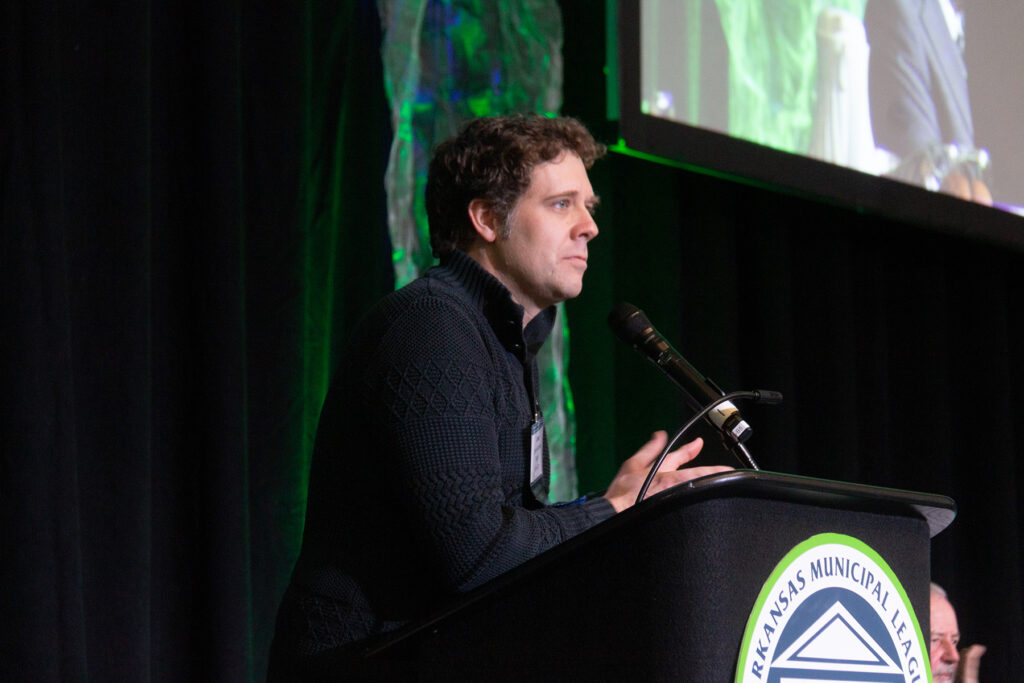
NLC President and Louisville, Kentucky, Council Member Kevin Kramer addressed the conference during the March 16 opening general session. He introduced the theme of this year’s conference: Local Governments Deliver. “Cities are where solutions happen, in housing, transportation, infrastructure and public safety,” he said. “We are growing resilient local economies and thriving communities because local governments deliver.” Despite local successes, political polarization—fueled by chaotic uncertainty at the federal level and intensified by social media—remains a difficult challenge, Kramer said, and he called for a renewed effort to promote civility in our cities, towns and villages. “We owe it to each other, to our residents and to the nation to find a way to civility and with dignity and respect explain ourselves to each other before we collectively push each other off the cliff.” To promote the initiative, the NLC Board of Directors unanimously adopted a Resolution to Lead with Civility, Dignity and Respect. Local government remains the most trusted level of government, Kramer said, and he encouraged every city and town to adopt local civility pledges and to utilize the resources NLC has made available online.
“We owe it to each other, to our residents and to the nation to find a way to civility and with dignity and respect explain ourselves to each other before we collectively push each other off the cliff.”—NLC President and Louisville, Kentucky, Council Member Kevin Kramer
NLC CEO and Executive Director Clarence Anthony expounded on the conference’s theme. “You deliver safe streets. You deliver clean water. You deliver parks where families can take their children. You deliver housing solutions. You deliver economic development opportunities. And most importantly, you deliver trust.” Innovation “kicks off” at the local level, which is why cities need strong partners at the federal level, he said. The NLC fought to make sure the 2021 bipartisan infrastructure law provided direct funding to local governments, and he urged city and town leaders to request of their representatives in Congress that new funding opportunities through legislation like the Bridges and Safety Infrastructure for Community Success (BASICS) Act and the 21st Century ROAD to Housing Act do the same. Direct funding has been especially crucial for small cities, Anthony said. “With the help of our partner, Bloomberg Philanthropy, we delivered more than $5 billion, which was awarded to about 2,600 communities throughout America. The vast majority of that went to cities, towns and villages that were under 25,000 population.”

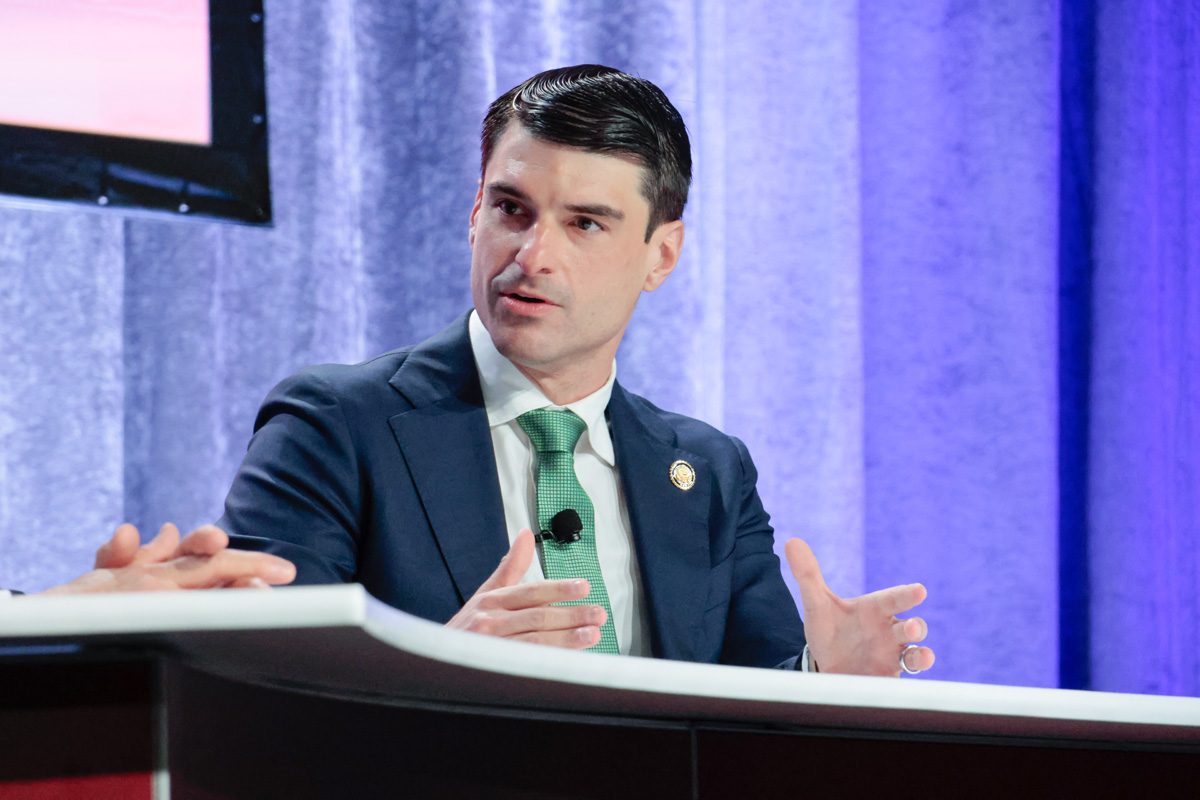
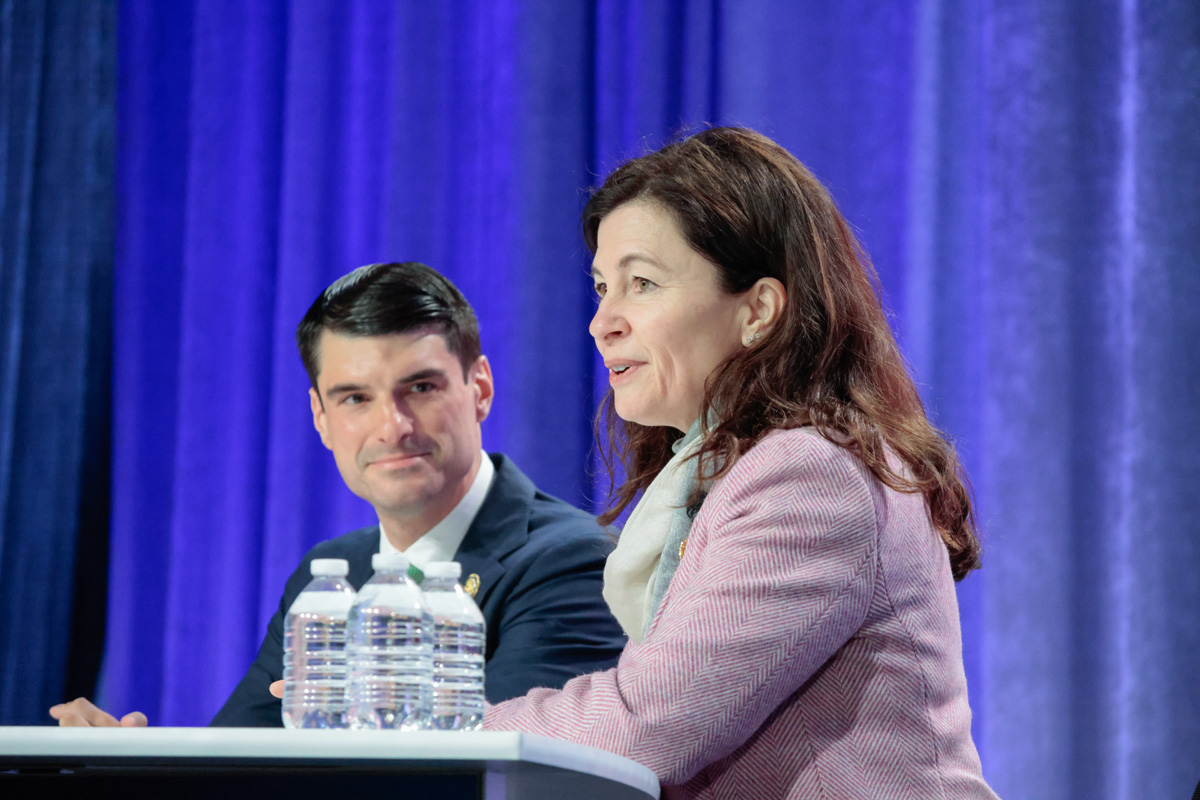
On the afternoon of Monday, March 16, NLC welcomed Reps. Kristen McDonald Rivet (D-Mich.) (above right) and Rob Bresnahan (R-Pa.) (above left) to discuss the bipartisan BASICS Act, which they co-sponsored. Pittston, Pennsylvania, Mayor Michael Lombardo moderated the panel, and he stressed the need for local project funding. “About 50 percent of the ownership of transportation infrastructure falls on the backs of local governments,” he said. “That’s why, more than ever, we need assistance like in the former bill that’s about to expire. And I think it would be safe to say that we’d like to ask Congress to help us with a new bill to pave the way to more transportation help.”

Breaking down barriers will be important to foster local-federal partnerships through the legislation, McDonald Rivet said. “So the idea is, how do we streamline the process, get rid of a bunch of red tape and make sure that not only can local communities set their own priorities, they also have the flexibility and funding they need.” Bresnahan agreed with his colleague from across the aisle. “I’ve always felt the best form of government was the government closest to the people, and I feel leaders like Mayor Lombardo and the rest of you are better advocates of taxpayer-funded dollars than us in Washington sending money to the state capital and then watching those funds sent, perhaps, not necessarily where you need those dollars the most.” The bill must pass through committee and both chambers of Congress before heading to the president’s desk, but both representatives expressed confidence that the legislation will eventually become law.
Many communities were undercounted in the 2020 census, and strengthening the operations of the decennial census is a priority for the NLC as 2030 approaches. “An accurate 2030 census will impact cities, towns and villages across the country for the next decade,” said NLC President Kevin Kramer, who moderated a panel discussion on the issue during the conference’s closing luncheon session. “This census is not political—it is one of the most fundamental acts of good governance and a cornerstone of how we invest in and understand our community.” In Arkansas, Springdale is one of the cities that was likely undercounted, and Mayor Doug Sprouse joined the panel to set the context for why an accurate count is important. The city’s diverse makeup includes the largest Marshallese population outside of the Marshall Islands. Between COVID hitting that community especially hard and confusion and fear caused by the potential of a citizenship question on the census, they essentially went “underground,” Sprouse said. “There was no getting them back to talk about a census at all.” Many funding mechanisms for local governments rely on census data, and in order to provide services to all their residents, an accurate count is important, he said. “That turnback money from both federal and state government is essential for us, and if you miss it on the census, then you’re behind the 8 ball for 10 years.” Even if a city conducts a special census, the baseline will still be low and it will lose out on funding, he said. “In Springdale’s case, we believe by the time we get to 2030 it will have been tens of millions of dollars.”

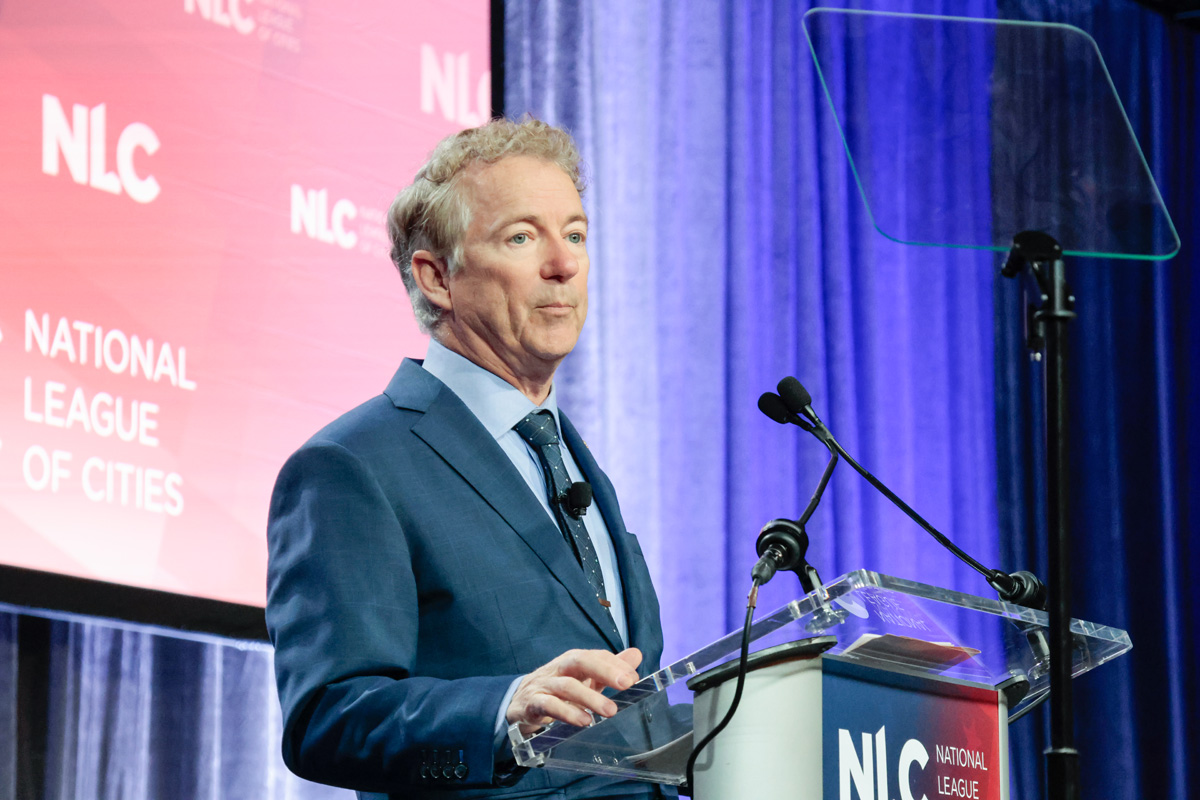
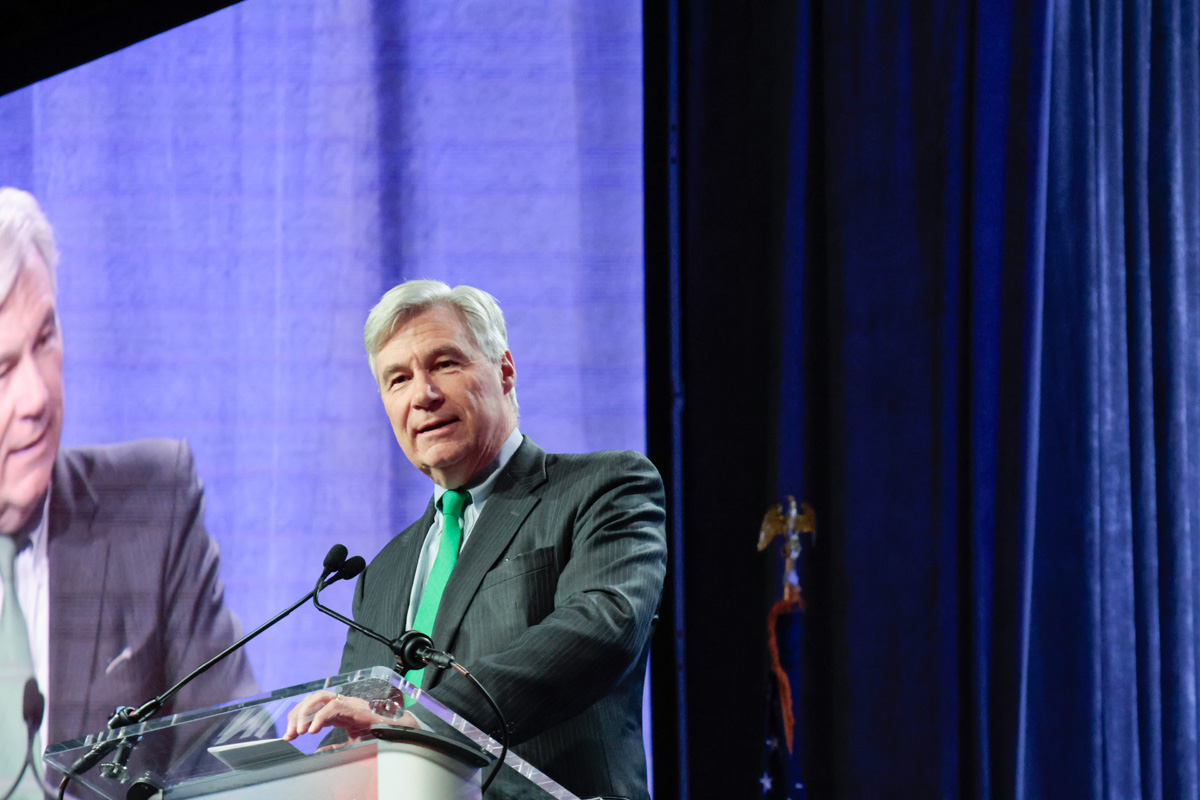
During the closing luncheon, the NLC welcomed Sens. Rand Paul (R-Ky.) (left) and Sheldon Whitehouse (D-R.I.) (right), who addressed local leaders. Paul, who has built a reputation as a staunch opponent of government overreach, shared his thoughts on federalism and the nation’s founders’ intent that the federal government’s powers be limited. “Federalism, the system that was originally designed, was intended to ensure that the leaders closest to the people—mayors, state and local representatives, governors—held the bulk of the responsibility for governing while leaders far away in Washington focused on the few problems that were common to the entire nation.” He argued that we now experience a sort of “tyrannical” top-down system of overregulation of issues that should be decided locally, where states are “laboratories of democracy.” “This may sound familiar, all this talk about division of power, states and federal government,” Paul said. “It should be because it’s the 10th Amendment, which prescribes that powers not delegated to the federal government are reserved to the states and the people respectively.”

Sen. Whitehouse warned of a potential collapse of the home insurance market due to climate risk, particularly in areas subject to flooding and wildfires. “The problem with that, in addition to the immediacy of how that hurts families’ budgets, the problem with that is that when you have a home insurance collapse, that cascades into the mortgage market, because you can’t get a mortgage on a piece of property that is uninsurable,” he said. The chief economist at Freddie Mac, the Federal Home Loan Mortgage Corporation, has warned that such a collapse could trigger a 2008-style recession, Whitehouse said. “For those of you who were working in municipalities in 2008, you know that is not a good thing. But it is a real danger, and that prediction from Freddie Mac was based entirely on a crash in coastal property values. It did not at all consider the emerging wildfire risks that western states have seen so clearly.” To help mitigate risk at the local level, he urged local governments to make sure flood maps are accurate and not reliant upon potentially outdated FEMA maps. “FEMA’s mapping is demonstrably inadequate and inaccurate, so please make sure that you have access to professional quality flood mapping.”
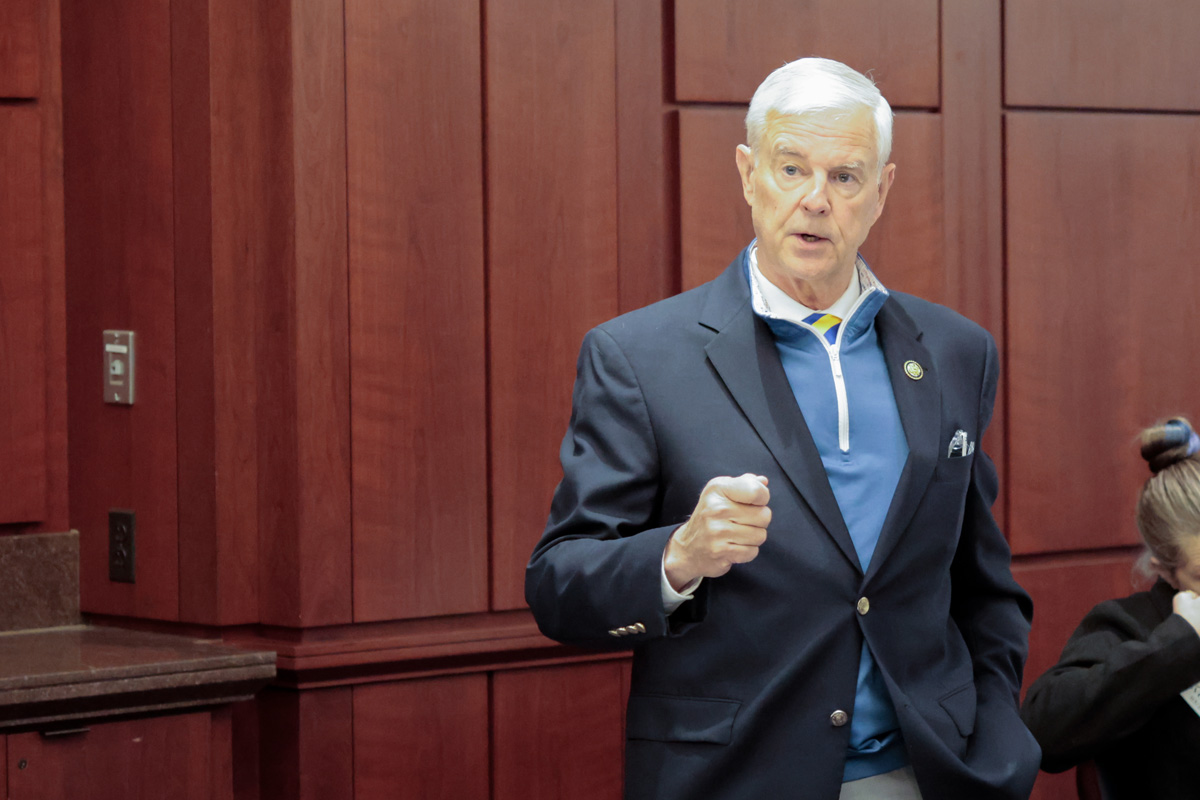
“Federalism, the system that was originally designed, was intended to ensure that the leaders closest to the people—mayors, state and local representatives, governors—held the bulk of the responsibility for governing while leaders far away in Washington focused on the few problems that were common to the entire nation.”—Kentucky Senator Rand Paul

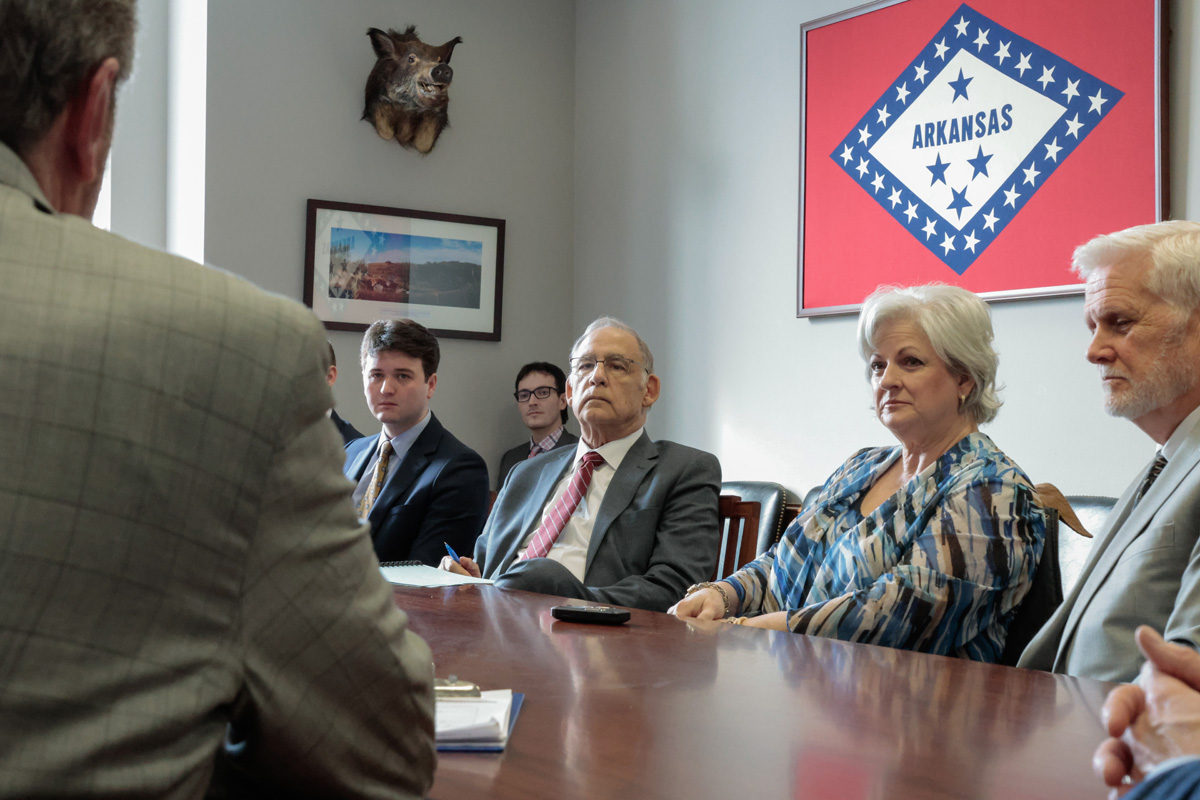
The final Wednesday of the annual Congressional City Conference is dubbed Hill Day, and local leaders are encouraged to use the time to set meetings with their congressional delegations and advocate for the needs in their communities. Not all members of Arkansas’ delegation were available during the time allotted, but city and town leaders met with Sen. John Boozman (right) and members of his staff at his office in the Dirksen Senate Office Building and with Rep. Steve Womack (left) during a luncheon in the U.S. Capitol Visitor Center. With more than $20 billion in estimated upgrades needed across the state, water and wastewater funding is a top municipal challenge, Arkansas local officials shared. Housing, streets, bridges and other transportation needs also ranked high on the list of needs. Boozman and Womack each thanked the city and town officials for their dedication to their communities and invited them to continue to share their needs and concerns with their staff in Arkansas and in Washington.

Arkansans at the table

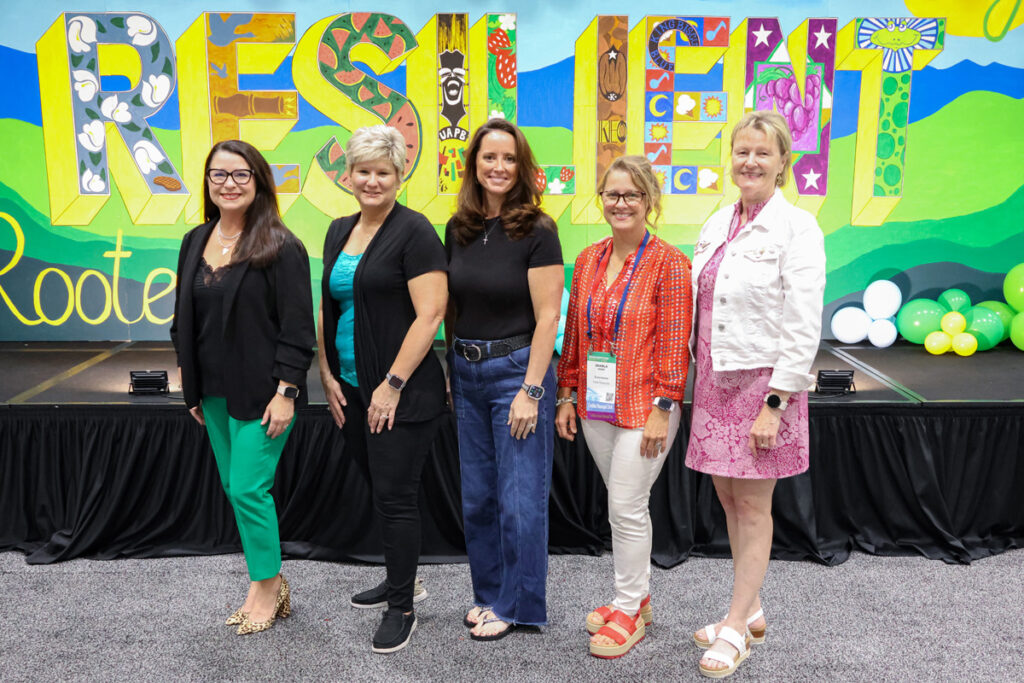
As members of the Arkansas Municipal League, all Arkansas cities and towns are also members of the National League of Cities, and this year our state is well represented on NLC boards and committees. Springdale Mayor Doug Sprouse serves on the NLC Board of Directors, and at this year’s Congressional City Conference, he was invited to participate in a panel discussion on the general session stage on Tuesday, March 15. Hot Springs City Director Phyllis Beard (above) serves as vice chair of the NLC Small Cities Council, which is open to municipal officials from member cities with populations of 50,000 or less. Small cities make up 80 percent of NLC’s membership, and the Small Cities Council advocates for their needs. Also on that council are Beebe Clerk/Treasurer Carol Westergren, Luxora Mayor Lee Brown, Luxora Council Member Jackie Rolland and Texarkana Assistant Mayor Laney Harris. Fayetteville Council Members D’Andre Jones and Mike Wiederkehr serve on the University Communities Council. Wiederkehr also serves on the First Tier Suburbs Council. Bentonville Mayor Stephanie Orman is a member of the Large Cities Council. The NLC is also home to numerous federal advocacy committees, and Arkansas city and town leaders are at the table there as well. Those serving on these issue-focused committees are: Cabot Mayor Ken Kincade, Transportation and Infrastructure Services; West Memphis Director of Emergency Management DeWayne Rose, Public Safety and Crime Prevention; Cave City Mayor Jonas Anderson, Information Technology and Communications; Texarkana Assistant Mayor Laney Harris, Youth, Education and Families; Batesville Mayor Rick Elumbaugh and Russellville Director of Sustainability and Resilience Sara Jondahl, Energy, Environment and Natural Resources; and Hot Springs City Director Phyllis Beard, Race, Equity and Leadership.

Further Reading