
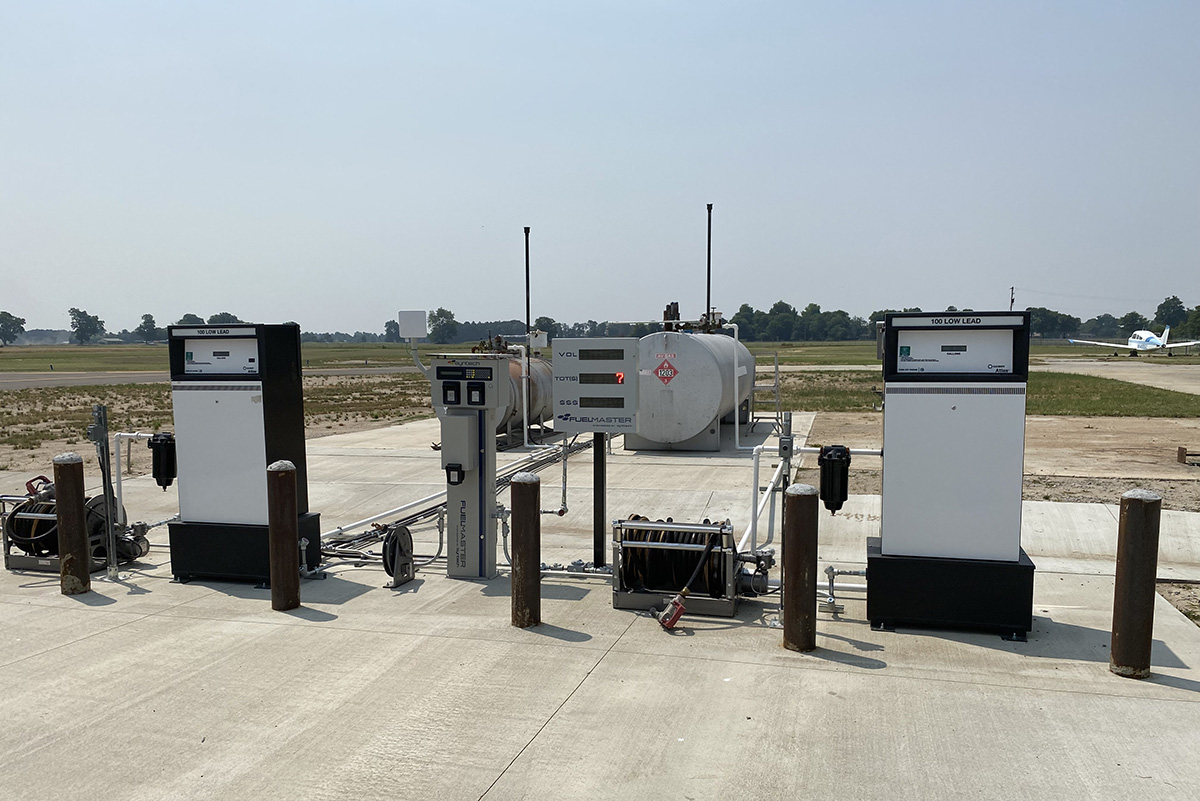
For decades, 100LL (100-octane low-lead) has been the standard fuel for piston-engine general aviation aircraft. That is about to change. The Federal Aviation Administration and aviation industry are working toward a nationwide transition away from leaded aviation gasoline by the end of 2030, creating a significant planning consideration for general aviation airports across the country.
In July 2026, the FAA released its Transition Plan for Unleaded Aviation Gasoline, which established a phased approach for testing and authorizing fuels, gaining operational experience, expanding production and distribution, and ultimately transitioning the general aviation fleet. The plan recognizes that this transition will involve more than simply changing the fuel available at the pump—it will require coordination among aircraft owners, fuel suppliers, airports and regulators.
Why is aviation moving away from 100LL?
100LL is currently used by a large portion of the general aviation fleet. Unlike automotive gasoline, aviation gasoline, or avgas, continues to contain tetraethyl lead (TEL), which provides important octane and engine-performance characteristics. The continued use of leaded avgas has raised environmental and public-health concerns, particularly for communities surrounding general aviation airports.
The FAA’s objective is to eliminate leaded aviation fuel without compromising the safety or operation of the existing aircraft. This requires fuels that meet the performance needs of today’s aircraft while also establishing a reliable production and distribution network.
A phased transition
The FAA’s Transition Plan establishes a phased approach to reaching the 2030 goal. The initial phase focuses on testing and authorization of unleaded fuels and addressing technical questions related to fuel performance and compatibility. The FAA is currently testing candidate fuels through its Piston Aviation Fuels Initiative (PAFI), while other fuels are progressing through the Supplemental Type Certificate (STC) pathway.
As approved fuels gain operational experience, the transition will move toward expanded production, distribution and availability. The FAA recognizes that this is not an immediate replacement of 100LL. The plan calls for airports to introduce unleaded fuel alternatives while maintaining 100LL availability during the transition. This allows aircraft that have not yet transitioned to continue operating while unleaded fuels become more widely available.
What does this mean for airports?
For airport owners and operators, the transition will require thoughtful planning and potentially significant infrastructure improvements. Airports should begin evaluating their existing fuel storage, distribution and dispensing systems now to determine what modifications or additions may be necessary to accommodate unleaded fuel. Depending on the airport’s size and fueling operations, improvements could include additional or modified storage tanks, fuel trucks, piping, pumps, dispensers, loading facilities, and associated electrical and site infrastructure. These improvements should be considered as part of any upcoming airport master plans, capital improvement programs, and planned fuel-farm or apron projects. Identifying funding opportunities will be an important part of this planning process. The FAA has indicated that airport infrastructure supporting the transition may be eligible for federal funding under applicable programs.
Planning for a period of dual fuel availability
One of the most important considerations for airports will be managing the transition period when both 100LL and unleaded avgas are available. The FAA is specifically working to prevent premature disruptions to the 100LL supply while unleaded alternatives become sufficiently available across the fleet.
For airports, this could mean maintaining existing 100LL infrastructure while adding new infrastructure for unleaded fuel. The appropriate solution will vary based on airport size, fuel demand, available property, existing fuel systems and the needs of airport users.
Rather than waiting until 2030 to address these issues, airport sponsors can begin evaluating their existing fuel systems and identifying potential improvements during their normal planning and capital improvement processes.
Looking ahead
The transition from 100LL to unleaded aviation gasoline will be a multi-year effort involving aircraft manufacturers, fuel producers, distributors, pilots, fixed-base operators, airports and the FAA. With the national goal of eliminating leaded aviation fuel from the piston-engine fleet by the end of 2030, airport owners have an opportunity to begin planning now.
For airports, the transition is not simply a change in the fuel being sold—it is an infrastructure, operational and planning consideration that should be incorporated into future projects. By evaluating fuel facilities early and coordinating with airport stakeholders, sponsors can position their facilities to accommodate new fuel options while maintaining safe and reliable service throughout the transition.