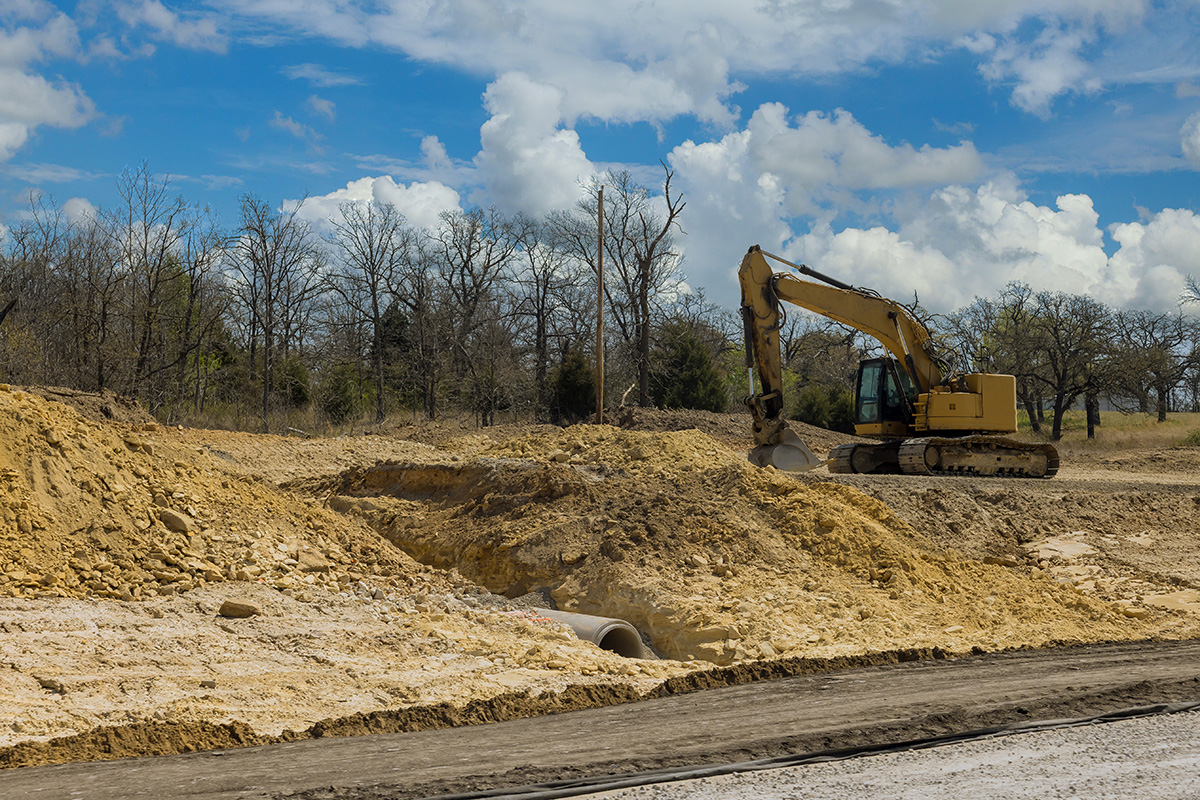
Whether your city or town needs to resurface several streets or make upgrades to an existing utility, the project delivery method will define how the project is handled from beginning to end. Each method carries the weight of different relationships, risks and priorities. While the engineering world is seeing construction manager at-risk and design-build become increasingly popular, the most widely used and understood approach for municipal projects is the traditional design-bid-build method.
Project planning and funding
Identifying a need is crucial to beginning any project. Sometimes the need is very straightforward. Let’s say the Arkansas Department of Transportation requires a utility relocation. With this, the client must allocate funds, adhere to strict timelines and research risk mitigation.
But other times, simply identifying the problem is its own mini project with associated costs and planning needs. For example, a municipality may consistently experience low water pressure every summer during peak demand. The easiest fix may be a new water tower placed at the highest point in their system. But is that the only cost-effective option? How large should it be to accommodate this growing community? If the decision is made to increase the pressure, how could this impact the existing pipes? Although a problem has been identified, there are many factors to consider and no clear solution. Whatever the need, project planning is vital to the success and schedule of the project.
During this phase, you need to identify project constraints, permitting requirements, schedules and your funding source. Municipalities may have funds available through utility rates, previous planning efforts or dedicated funds. If additional funding is required, it can be pursued through the Arkansas Natural Resources Division, USDA Rural Development, or other state or federal resources in the form of grants or loans.
If an engineer hasn’t already been recruited to assist with planning and funding efforts, then it’s time to engage one for the design phase. Once funds are designated, the design phase can begin.
Design phase
During the design phase, the engineer and project owner work together to develop plans that best serve the project’s needs and meet regulatory/design requirements. The level of preliminary work required will vary depending on complexity and risk. This may include boundary and topographic surveys, geotechnical investigations, environmental studies and a review of existing infrastructure data. Lower-risk projects may rely more heavily on available GIS data.
The objective of this phase is to accurately define existing conditions and develop a complete, buildable design. There are multiple iterations of analysis, drafting, review and refinement. The owner is critical through the design phase, especially when ensuring designs align with effective construction follow-through. Municipal staff contribute valuable institutional knowledge such as undocumented utilities, past site conditions or operational preferences, all of which can significantly impact the final design. Active engagement ensures the project meets operational needs and reduces revisions later. Nearly complete designs are often subject to review by agencies such as the Arkansas Department of Health, the Department of Environmental Quality, funding entities, other municipalities and more. This depends on project size and the stakeholders involved, but nearly complete designs often need some final revisions.
In the traditional delivery method, the transition between the design and construction phase is project bidding. In stark contrast to collaborative delivery methods, a contractor is not involved in the preliminary and design phases. Design is fully completed before any construction begins, and there is a clear separation between design and construction responsibilities.
Bidding phase
During this phase, plans and project specifications are made available to contractors, and formal advertisements are issued. On bid opening day, submissions are received and publicly opened. The engineer evaluates the bids and typically recommends the lowest bidder for the award. The governing body then formally awards the contract.
Construction phase
Before construction begins, the contract must be executed and a preconstruction meeting held. This will establish the project schedule, roles and responsibilities, and address any special conditions. During construction, the contractor submits product data (“submittals”) and may issue Requests for Information to clarify the plans. The engineer reviews these items and guides, ensuring compliance with the design intent.
Clear communication and timely decision-making are essential during this phase to avoid delays. Proper documentation of construction activities is also critical, both for quality assurance and for maintaining a complete project record.
Substantial completion and closeout
Construction begins to transition to the closeout phase once substantial completion is reached. Then the project can be considered operational. For example, if the project is a water line, substantial completion may be when the line is pressure tested and chlorinated, ready to deliver water to customers. The date of substantial completion will also determine warranty start dates.
Remaining work often includes final restoration and minor corrective items. The engineer conducts inspections, followed by a punch list walkthrough with the owner, which the contractor must then adjust. Even after construction is complete, administrative closeout remains. Depending on project requirements, this may include record drawings, final reporting, certifications and more.
Conclusion
The design-bid-build life cycle is the baseline for project delivery methods. Phases flow from planning to design, bid to construction. Responsibilities are clear, and risk is majority held by the owner of the project. This is the most traditional method and is beneficial when construction funds aren’t quite available. However, larger, more expensive projects might be better suited to a collaborative delivery method, such as construction manager at-risk or design-build.
For example, during a construction manager at-risk project’s lifecycle, the design and construction phases overlap. Risk is shared as construction is subbed through them, and owners have control of their level of involvement. Due to risk distribution, aspects that typically occur in the construction phase may overlap into the design phase, such as the purchasing of materials. Markets rise and fall, and lead times can be long, making it best to move forward as quickly as possible. Other parts of a project may be decided early as well and remain unchanging, allowing construction on those items to begin quickly. Design-build provides a single point of accountability as these projects are bid out as one contract containing both design and construction services. This is also an excellent option for a project with a short timeline.
There are many challenges and advantages to new delivery methods, and understanding the traditional design-bid-build lifecycle provides a strong foundation for evaluating which approach best aligns with a project’s priorities such as risk, cost and schedule constraints.