Few things fill a planner’s heart with joy and dread more than hearing a developer propose infill development. Like a 19th century cure-all patent medicine, there isn’t much that infill development can’t be used for to help treat a city’s ills, albeit in small doses. It helps a city’s bottom line, revitalizes old neighborhoods and increases the efficiency of utilities, among a long list of benefits. However, getting infill development approved can be difficult, and local officials need to take deliberate steps to help make it a reality.
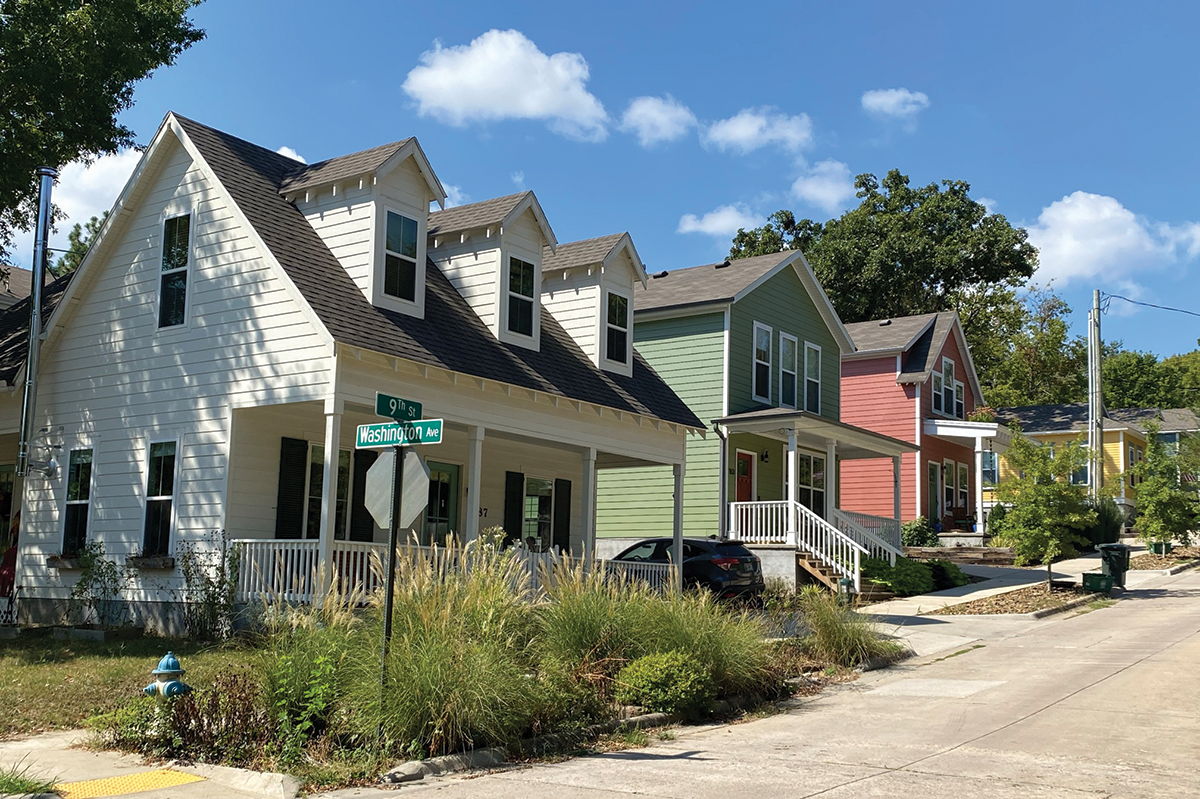
Originating in planning circles, the concept of infill development has escaped those confines to become part of common public discourse. It is lauded by everyone from activists to architects and bankers to baristas. It can take many forms, but for our purposes let’s consider infill housing. Put simply, it is development that “fills in” existing vacant and underutilized property. That could be a new house on a vacant lot in an older neighborhood, an apartment complex as a redevelopment of an aging mobile/manufactured home park, or a new, mixed-use building downtown. For many, it causes a positive gut reaction, like seeing an overgrown yard mowed, but there are numerous tangible reasons why infill development is good.
Fiscal impact
Money always matters, especially when it comes to infill development. At its core, the issue is one of simple geography and math. Growth generally means more tax revenue, but where that growth occurs makes all the difference. Municipal services, whether trash collection or emergency response, are typically more efficient and less expensive to provide when people are located closer together. Serving 10,000 residents in a compact 10-square-mile area costs less than serving the same population spread across 20 square miles, as crews travel shorter distances. Infill development fosters this efficiency by concentrating new growth within existing neighborhoods, lowering per-capita service costs. The result is savings that can either reduce the burden on taxpayers or be reinvested into other community priorities.
Infrastructure benefits
Closely related to fiscal impacts are the practical infrastructure benefits of infill development. Infill allows a city to get more use out of infrastructure it has already paid for. A short residential block requires the same basic components—water lines, sewer pipes, storm drainage, pavement—whether it serves four homes or six. By adding more households within that same footprint, the fixed costs of building, maintaining and eventually replacing that infrastructure are shared more widely. This lowers the per-household burden and stretches public investments further. When this pattern repeats across dozens or hundreds of streets, the cumulative effect is substantial: a more financially sustainable system that doesn’t require constant expansion to function. By contrast, extending new infrastructure to serve development on previously undeveloped land creates entirely new long-term liabilities, committing the city to decades of maintenance costs for systems that start out lightly used and expensive to serve.
Developer benefits
The benefits of infill development are not limited to cities or residents. They also extend to developers and investors. By its nature, infill presents a lower barrier to entry for housing investment. Building a new subdivision is a complex, capital-intensive process: Land must be cleared, engineering plans completed, approvals secured, infrastructure installed and financial guarantees put in place. This is all before a single lot can be sold or a building permit issued. This requires significant investment up front and carries considerable risk to the developer. Contrast that with the typically straightforward process of infill development. With infrastructure already in place, the primary hurdle is often securing financing and obtaining the necessary permits. This reduced complexity and lower up-front cost make infill a more accessible and attractive option, particularly in rural or slow-growth communities where large-scale development may not be feasible or where new housing investment has outright stalled.
Infill’s challenges
Before we get to the final verse of the hymn in singing infill’s praises, it’s important to recognize its challenges. These challenges are varied, messy and not always easy to fix. It often takes the right kind of homebuilder to make it work. After all, if it were easy, everyone would do it, right?
Finding infill lots for development can be a challenge. Property owners can be hard to track down, and vacant or underutilized lots are more likely to have ownership split among multiple parties. It often requires a lot of research and relationship-building to find good opportunities to purchase properties.
Infill can face neighborhood opposition. Status quo bias can be strong in established and older neighborhoods. People can often see vacant lots as their own little greenspace, whether or not they own it, and they’ll not want to see that change. If a public hearing is required for development, be assured that opposition will exist.
Market risks are higher. Areas where infill is viable often contain a mix of housing conditions, which can make appraising the final product challenging. What happens when adequate comparable properties at the target value don’t exist? This uncertainty makes being a first mover in a neighborhood risky and can discourage many homebuilders and investors.
The city’s role
The good news is there is a lot that mayors, council members and planners can do to help create a strong glide path for infill. It takes deliberate and coordinated effort, but the benefits can be considerable for everyone involved. Here are a few key ways to help.
Review lot size standards. Many older, established neighborhoods were developed before zoning codes, and their lot sizes often fall below current requirements. Creating “lot of record” provisions that recognize and allow development on these existing lots is essential to enabling infill. Beyond that, cities should evaluate their current lot size standards and reduce them where appropriate. This added flexibility can be a powerful tool in making infill development more practical and achievable.
Expand by-right uses. When approvals require public hearings, uncertainty is introduced into the development process. An angry crowd can kill a project. Allowing development “by right” can help remove that barrier. By right means a developer is permitted to build certain uses without discretionary approval as long as they meet established standards. In practical terms, it means “if I meet the rules, I can build.” That predictability is a powerful incentive and can make the difference between a project moving forward or not.
Enforce codes and explore land banking. Abandoned and dilapidated buildings, along with other code violations, can drag down property values and weaken market confidence in a neighborhood. Vacant properties become less attractive, and absentee owners may be less inclined to maintain them or recognize their potential value. Consistent and effective code enforcement can help raise baseline conditions and signal that reinvestment is worthwhile. At the same time, land banking can play a key role by acquiring troubled properties and positioning them for future redevelopment, helping move land back into productive use.
Infill development is an opportunity that cities should face directly. Though challenging, infill is an important tool to achieving real community success. When it works, you’ll see your community slowly transform, building strength over time, one property, one street and one neighborhood at a time.