Elected officials and personnel from cities and towns across Arkansas came together at the Little Rock Marriott and Statehouse Convention Center June 17-19 for the 92nd Annual Convention of the Arkansas Municipal League. With the theme Rooted, Resilient and Rising, Convention 92 offered local leaders the opportunity to discuss an array of issues essential to municipal government, elect a new slate of officers for the year and adopt a package of resolutions that will guide the League’s advocacy efforts ahead of the 2027 legislative session.
After a successful Winter Conference in January, attendance remained strong for Convention 92, with more than 800 municipal leaders representing 216 cities and towns, and more than 1,200 participants overall.
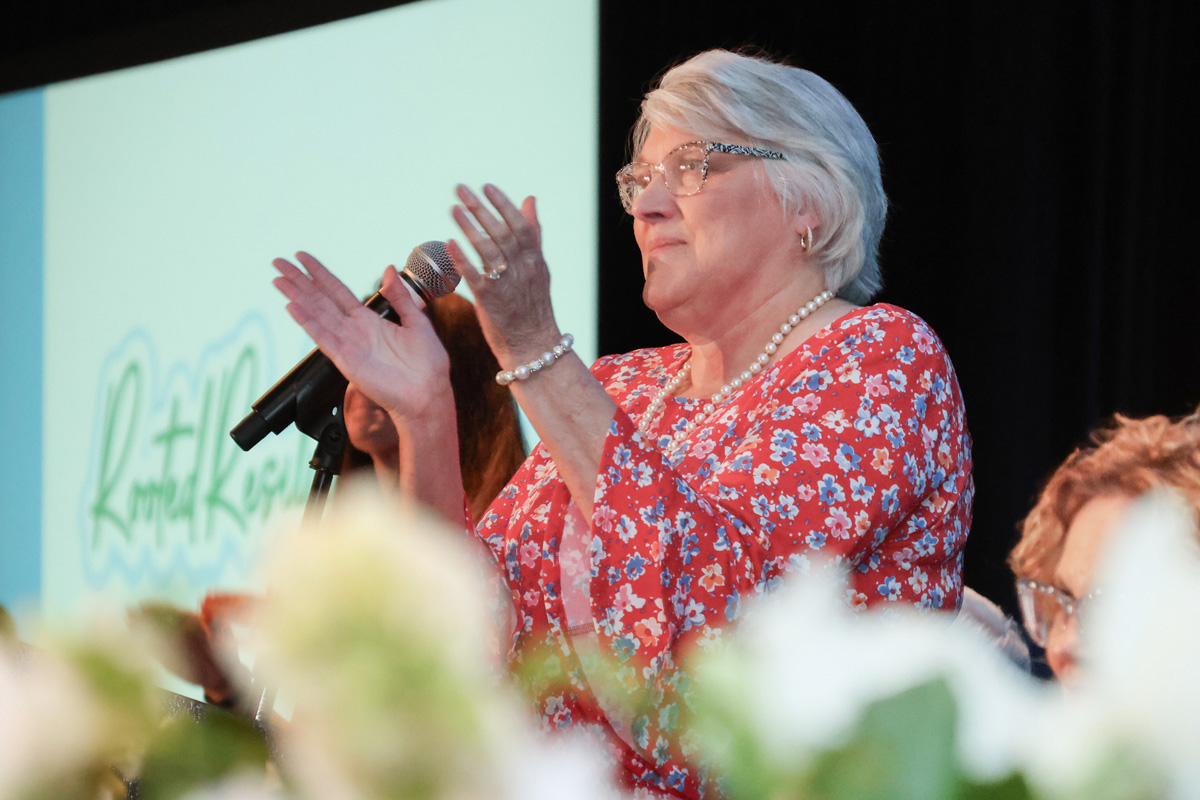
During the League’s annual business meeting on Friday, June 19, the membership elected a new slate of officers for 2026-2027. Beebe Clerk/Treasurer Carol Westergren was named president. She is the first clerk to hold that office since the 1950s. Other officers for this year are Wynne Mayor Jennifer Hobbs, first vice president; Paragould Mayor Josh Agee, District 1 vice president; Benton Mayor Tom Farmer, District 2 vice president; Bentonville Mayor Stephanie Orman, District 3 vice president; and Mena Mayor Seth Smith, District 4 vice president.
The Resolutions Committee recommended a package of six resolutions to the full membership, which they adopted unanimously. The resolutions include support for initiatives that promote affordable housing, freezing the 3% administrative fee on the collection of local sales and use taxes, and amending the Freedom of Information Act to help prevent administrative harassment. The League membership also voted to support Issue 3, the ballot initiative that would provide cities and towns with more options to promote economic development. The initiative will come before Arkansas voters in the November 3 General Election. The resolutions will appear in the League’s updated Policies & Goals 2026-2027 publication, which will be available online in August and included as a supplement to the autumn issue of City & Town.
In addition to general sessions, Convention 92 featured seven breakout sessions that offered training in a variety of areas, including an overview of FOIA, bond initiatives and elections, reducing workers compensation claims and tracking municipal revenue. The sessions qualified participants for credit as part of the League’s Arkansas Civic Education (ACE) Program, the voluntary continuing education and certification program for municipal officials and personnel, now in its third year. For program participants unable to attend the Convention, most sessions are available on-demand through the ACE Hub.
The Convention also featured nine modules of the new Mandatory Treasurer Training (MTT) track, which the League has developed in partnership with Arkansas Legislative Audit to help municipal treasurers and finance officers comply with Act 671 of 2025, which requires they complete eight hours of training in subjects including budgeting, fund accounting, payroll, audits and ethics. The free training is also available online through the League’s ACE Hub, and weekly two-hour webinar sessions will also be available starting August 4. For more information about the training, please email askmtt@arml.org.
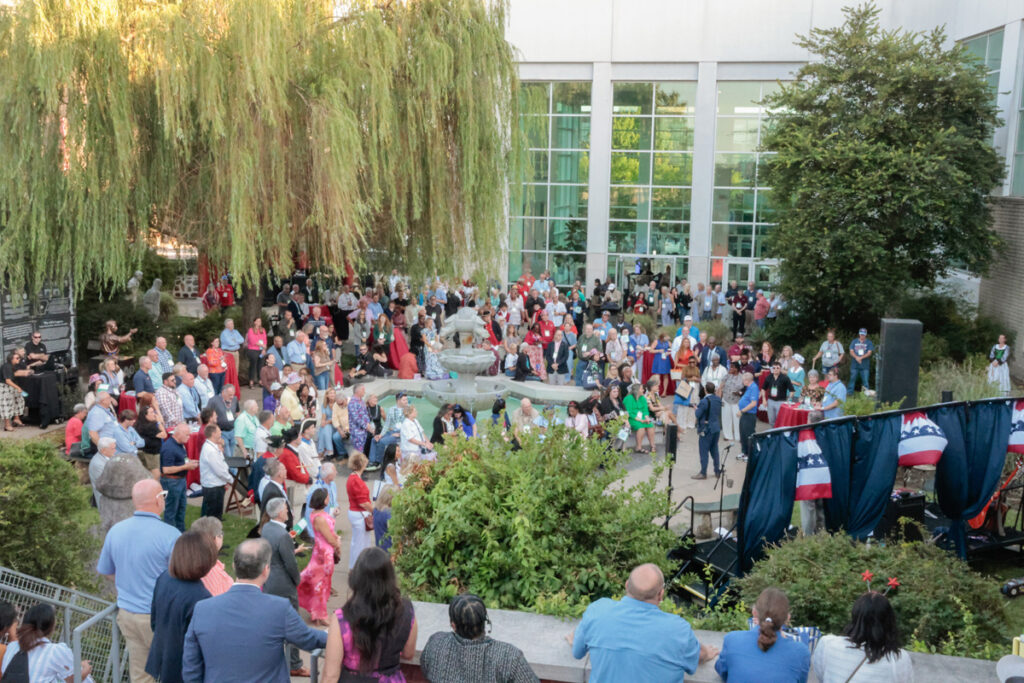
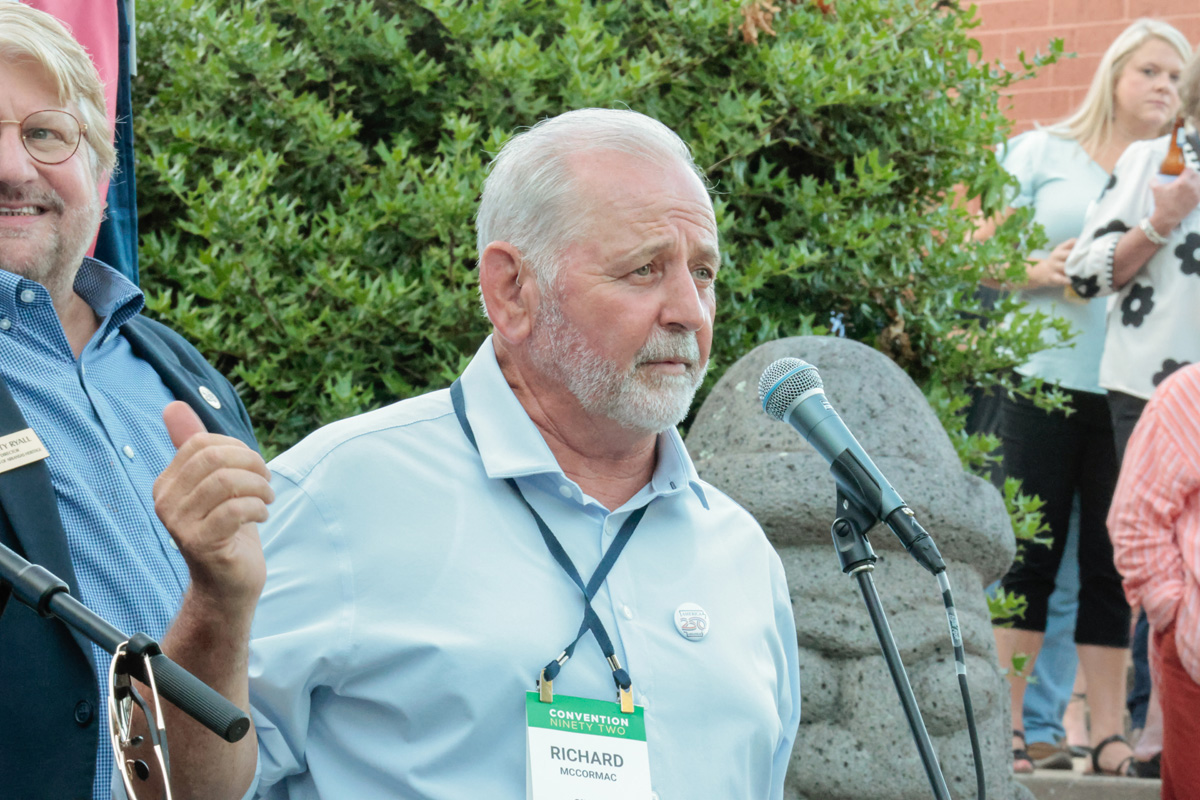
The United States celebrated its semiquincentennial (aka 250th birthday!) on Independence Day, and for Convention 92, the League partnered with the Arkansas250 Commission to turn the June 17 opening night banquet into a celebration of the momentous occasion. After a cookout-style buffet, Conventiongoers took to the Statehouse Convention Center’s H.U. Lee Garden, many decked out in their red-white-and-blue best, to enjoy patriotic tunes both contemporary and historic. The Commission also arranged a Black Hawk helicopter flyover by the Arkansas National Guard. July 4 may have passed, but America250 events in Arkansas will continue throughout the year, said Clinton Mayor Richard McCormac (above right), who serves as the League’s designee on the Commission. He encouraged everyone to visit the calendar of upcoming Arkansas250 events on the Arkansas Heritage website at arkansasheritage.com/arkansas-250/events.

A recent Arkansas Supreme Court decision in Steven Hendrick and X-Dumpsters v. City of Holiday Island has made providing those services more challenging for cities, whether they manage the service in house or contract out. From left, Arkansas Department of Energy and Environment attorney Basil Hicks, PPGMR Law attorney Sarah Tacker, League staff attorney Brie Gibson, Wynne Mayor Jennifer Hobbs and Hot Springs City Manager Bill Burrough discussed the regulatory background of waste management and the potential impacts of the court’s decision in General Session 4 on Thursday, June 18. Like many cities, Wynne runs its own solid waste management, and it is a substantial investment, Hobbs said. “We want our cities to be safe, clean and presentable, but then we have the investment. We carry out that residential garbage and that commercial garbage service. So those are two separate pieces of equipment that we have to invest in, and it’s important that we continue to have the control over how those operate.” Since the decision last December, Hot Springs has seen several small waste collection companies pop up to try and do business in the city. A big issue is not knowing where these collectors are going to dispose of the waste they pick up, Burroughs said. “We spent a lot of years cleaning up the woods around Hot Springs just from things like this, because it is difficult for us to manage.” At the annual business meeting, the League passed a resolution supporting amending state law to grant municipalities the authority to contract with one waste management service provider and protect local control.
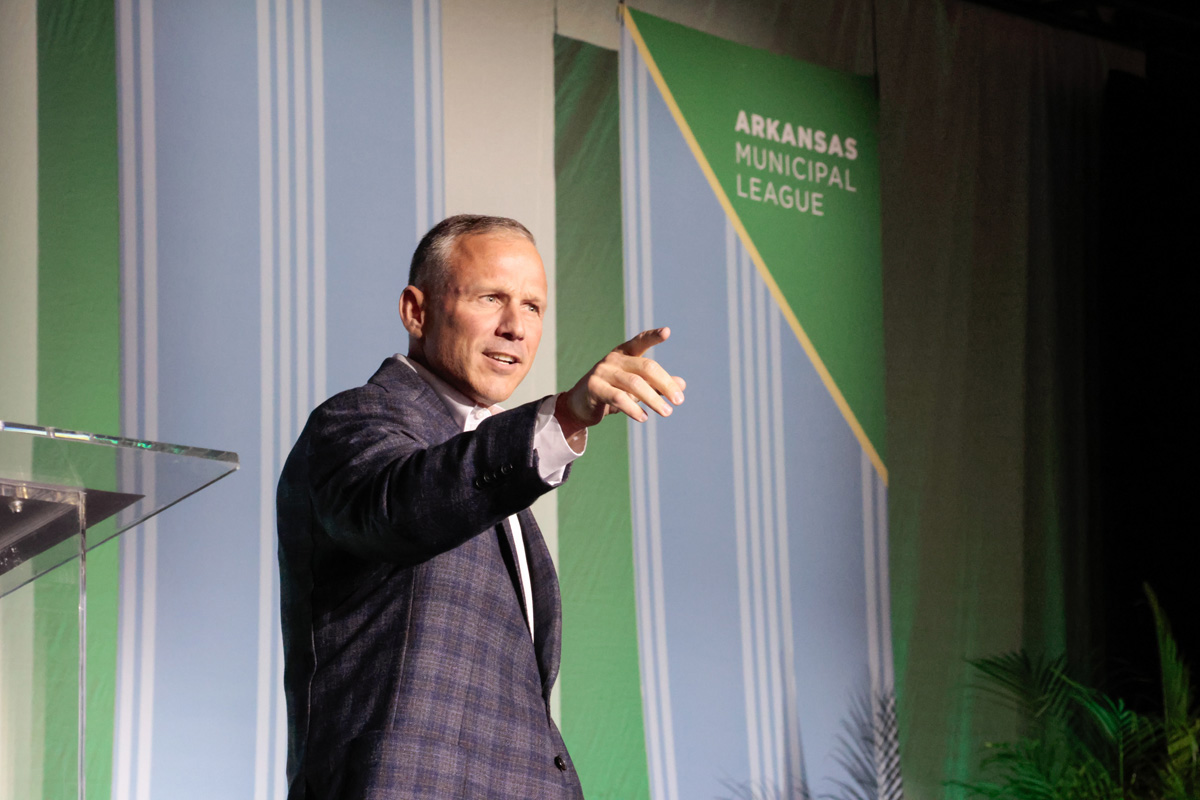
The League welcomed keynote speaker Jason Curry to address Convention 92 during the opening general session on the afternoon of Wednesday, June 17. Curry, who serves as teaching pastor at the Church at Rock Creek in Little Rock, is the author of the book Finish Empty, and he encouraged local leaders to serve their communities with purpose and discipline to achieve excellence. “Intention doesn’t matter,” he said. “What you intended to do today won’t make a difference. What you intended to do today won’t change your life.” Taking average steps won’t lead you to a place of excellence, he said.
If you want to end up somewhere rare, you’re going to have to take a rare path.”
—Jason Curry
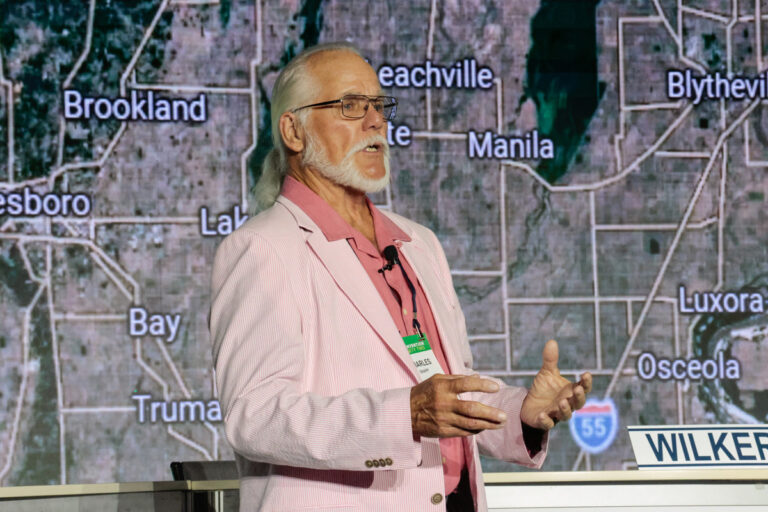
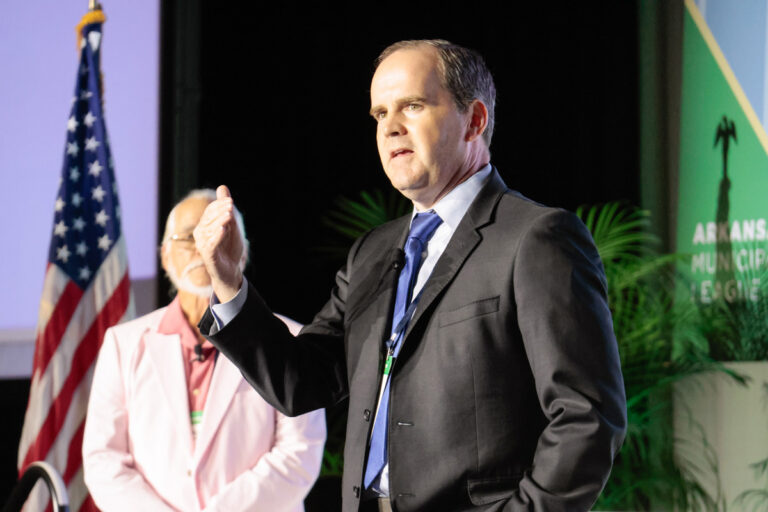
If you were to stroll past Governor’s Hall IV around 10 a.m. on June 18, you would have heard several hundred city and town officials chanting in unison: “We need Issue 3!” Leading the chant was Walnut Ridge Mayor Charles Snapp, a champion of the ballot initiative that will go before voters in November’s General Election. If passed, it would give local governments new tools to incentivize economic development, including retail, without raising taxes. The League membership on June 19 adopted a resolution supporting Issue 3. Most other states have similar initiatives in place, and Issue 3 would even the playing field, Snapp said. “How many opportunities have we lost because we didn’t have this tool in our toolbox? Better yet, how many developers don’t even consider Arkansas because they know we don’t have the tool that 48 other states have?” League General Counsel and Legislative Director John Wilkerson, and Blake Gary, former League attorney now with Gary Law, have studied the issue and held discussions about it across the state at League regional meetings. If passed and a city or town chose to use the new tools available, it could boost local economic development, community development, housing and more, Wilkinson said.
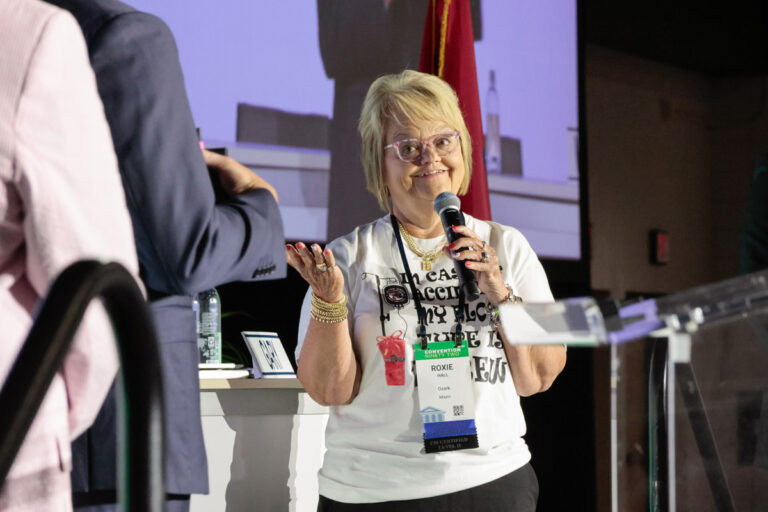
An economic development district (EDD) created through Issue 3 would be a flexible tool. “Economic Development Districts are areas created by the cities. Local control. The cities choose the size, the cities choose the location, the cities choose length of the term in which these EDDs exist. So if you want to have an EDD in the east side of town in a two-block radius, and you want it to exist for only five years, you can do that.” It is a “watershed moment” for Arkansas, he said. For Ozark Mayor Roxie Hall, she knew immediately what business she’d like to attract to a long-vacant lot were the city able to create an economic development district. “Seven Brew!” The popular retailer would be a wonderful addition to Ozark, not least because she personally loves their coffee. To quote her t-shirt, “In case of accident, my blood type is 7 Brew.”
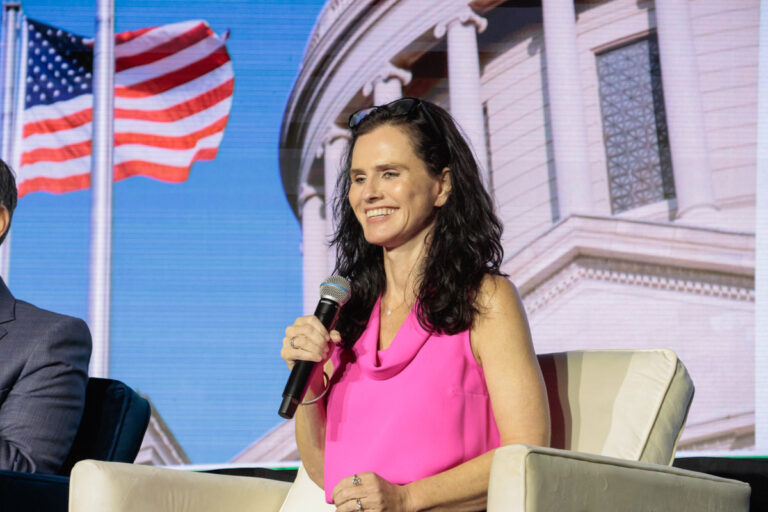
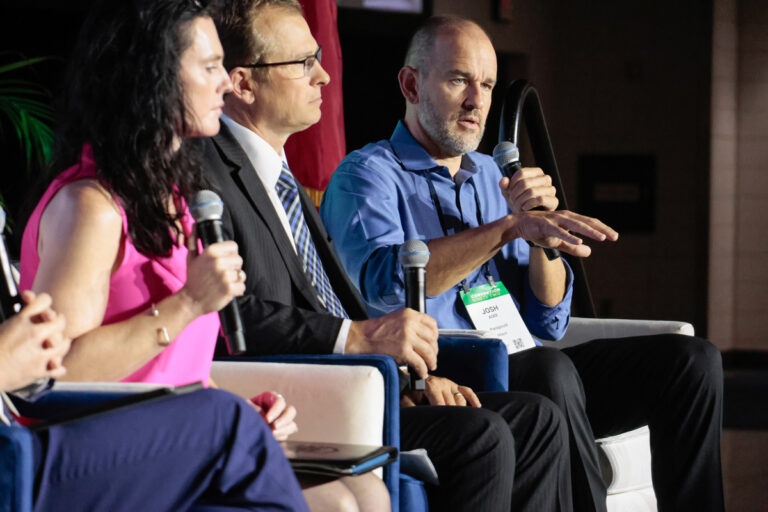

Housing policy has been a focus of discussions at League regional meetings and conferences for the past several years, and the conversation continued at Convention 92 during the final General Session on Friday, June 19. While every municipality has housing challenges, the nature of the challenges vary from city to city, which is why working together—among cities and with the legislature—to find solutions is crucial, the League’s John Wilkerson said. “We are too small of a state to have more than one team. We have to be one team.” The challenges in Crossett are a “moving target,” Mayor Crystall Marshall said. “Our issues are compounding day by day. We recently had our only assisted living facility close in Crossett, which was a profound loss. That’s real homes. You just can’t get more personal than someone’s home. We’re chasing a moving target, but I’m excited to dig in and see what we can get done together.”
Neglected, abandoned and tax-delinquent properties are another common issue, and Paragould has had success through land banking to put properties back into productive use, Mayor Josh Agee said. He showed before-and-after pictures of properties in the city’s north end. “In this area, we had not had homes built in 70 years, and now we have over 40 new homes being built in just this small area.”
The League passed a resolution to continue to push for thoughtful, flexible legislation that helps cities and towns promote attainable housing, and Garver Planning Leader and League Planning Consultant James Walden remains hopeful about the 2027 legislative session. “We’ve got an opportunity for good reform and for addressing things that maybe we’ve put off for a while,” he said. “I’m so hopeful because we have had those ongoing conversations and are really ahead of the curve.”

During the 2025 legislative session, the Arkansas Legislature passed Act 671, requiring all municipal treasurers and primary finance officers to complete eight hours of training in their field. Individuals serving as municipal treasurers on July 1, 2026, must complete the training by December 31 of this year. All others will have 180 days from the date they assume office to comply. For more than a year, the League has worked with Legislative Audit to establish a curriculum to help Arkansas cities and towns comply with the new law. Conducted through the ACE Program, the new Mandatory Treasury Training debuted at Convention 92, which featured nine modules covering key municipal finance duties and best practices. While most of the modules coincided with Convention breakouts, MTT took over the General Session 3 stage on Thursday, June 18, where Pea Ridge Clerk/Treasurer Sandy Button, left, joined League Chief Financial Officer Cindy Frizzell, right, to share core concepts, budgeting basics and internal controls. Participation in MTT is off to a good start, with more than 140 local officials having completed the training as of the end of June. The training is free, and it is available on-demand through the League’s learning management system on the ACE Hub. For more information, visit armuni.org/education or email askmtt@arml.org.

The League held its annual business meeting the morning of Friday, June 19, and after reports from the boards of each of the optional benefit programs, Executive Director Mark Hayes presented his annual report to the membership on the status of the organization. There are 500 cities and towns in Arkansas, and the League this year is at 100% membership, he said. He credited the strong work of the field representatives for “lassoing” many of the smallest towns. “They have gone to gas stations to secure signatures, gone to people’s homes to secure signatures.” It’s important to maintain 100% membership, he said. “By having all 500 as members, it allows us to speak in a universal voice at the capitol with a great deal of strength.” Hayes provided an overview of the organization’s activities the past year and participation rates in the League’s programs and services. Those numbers and other important information are available in the 2026 annual report, which is available on the League’s website. Click here to download a PDF of the report.
The executive director closed with a request for the membership to help push Issue 3 across the finish line in November’s General Election. “We can’t compete with the states around us right now. We don’t have the tools. We just don’t. Pass this, get the legislation in place and we’ll be in much better shape to actually compete for business. Please know how important it really is.”