Sharing my thoughts with you provided me with much joy over the years. Kind comments were more precious than you can imagine. I am happy to have served as your link to the Arkansas Municipal League in regards to urban planning.
My career with the League, though long, is a brief one compared to my journey as an urban planner. When I entered the profession, young planners were still involved in Urban Renewal and downtown malls—heady times.
Urban planning enjoyed a good deal of popularity in those days. One reason is that access to some Great Society grants mandated it. Another was that some grants furnished money for it. As the old tune goes, “Those were the days, my friends.”
When the grants faded and General Revenue Sharing ended, city council discussions centered on whom would be the first to be laid off, police officers or firefighters. One can imagine where the urban planner ranked.
After a few years during which our cities clung to survival, Don Zimmerman and Representative John Paul Hammerschidt led the campaign for the local option sales tax. It saved our cities and restored interest in planning, the function that had starved for eight long years. My phone started ringing and it hasn’t stopped.
Looking back over my life, I’ve had many good days. The best was when she said, “Yes. The answer is yes. I don’t even have to think about it.” The second best was the day during which the federal government confiscated my assault rifle.
Way up among the rest of the good ones was the day Don Zimmerman called and invited me to lunch. At a restaurant in Little Rock’s River Market, he asked if I might want a monthly assignment with the Arkansas Municipal League.
“Yes,” I said, “The answer is yes. I don’t even have to think about it.”
With that, I have visited cities in every portion and corner of our state. I remember each visit and each project in which I was honored to participate. As Mayor Furlow Thompson, down in Pot Luck, Arkansas, would say, “Hit don’t git no better’n that.”
People ask, “What has changed over the years?” Picking one issue is hard. The destructive influence of drugs over our communities ranks highly. In terms of the approach to planning, we once planned much of our cities around the neighborhood school concept. So much for that.
The growing dependency on the automobile created a centrifugal force that moved development far away from the downtown core of most cities. In our low-density cities, the neighborhood commercial store has become a dream.
A justifiable urge for transparency and citizen participation in the planning process creates mixed results. On the one hand, it promotes a “buy-in” from the residents for the plans produced. At other times, when it comes to higher densities of development, it has created what columnist George Will referred to as a “vetocracy.”
In short, the planning function is not a simple one. So many interests require consideration that the planner reminds us of an act on TV in which a juggler balances a dozen spinning plates on the tips of bamboo rods. How did I fare as a juggler and wind up on the pages of this magazine?
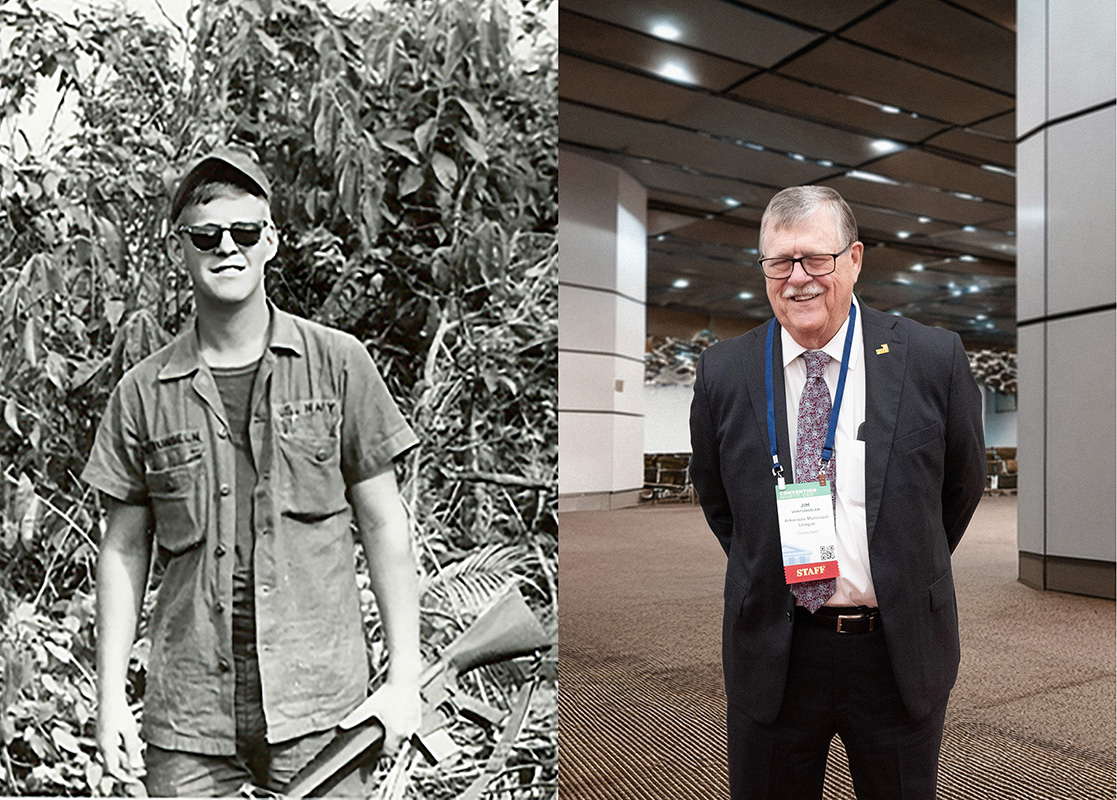
Eons ago, I joined a Little Rock consulting firm and began my career. Fresh off the boat from a four-year hitch in the U.S. Navy, I found the urban bustle and new skyscrapers exhilarating and sophisticated. My firm was one of six located in Little Rock and dedicated solely to planning. Money flowed. Life was good. No one lurked in the bushes willing to do me harm as in my previous job.
A lot of water has rolled down the Arkansas River since. Three new skyscrapers appeared in downtown Little Rock. The major retailers and the three movie theaters disappeared. A downtown “mall” appeared and disappeared. Through it all, urban visionaries like Jimmy Moses and John Gaudin have kept the faith and helped maintain viability in our Twin Cities. I still believe that the greatest single source of success for downtown development comes not from urban designers but dedicated and energetic individuals who love their cities like Richard and Vertis Mason loved El Dorado.
The years brought changes to the planning profession as well. I am the only member of my first firm still around. The six planning firms dwindled to one. At times, money stopped flowing. Somehow cities endured and the profession remains. As a friend said recently though, “It sure ain’t the same.”
Attending a planning commission or city council meeting in my early days, one would see mostly people who looked … well, like me. That is to say they consisted of a bunch of fat old white men. (City planning was probably simple enough back then for the men to handle.)
Big box retailers had just begun their assault on the urban environment, and most people wanted to live in a city. We still believed that more streets would solve our traffic problems. “White flight” had something to do with airlines. The nurturing impact of diversity had yet to reach our cities.
It hasn’t been a smooth process. Somewhere along the way, my profession decided that the best way for downtown to compete with the new malls was by becoming one. In cities across the United States, main streets were closed to traffic and “downtown malls” developed. That, of course, turned out to be the “Great Mother” of all bad planning ideas. They’re gone now, but the damage remains.
In closing, I shan’t even attempt to name any of the outstanding elected officials I’ve enjoyed the honor of serving. Neglect would far outweigh the praise. As a point of personnel privilege, however, I’ll point out two colleagues whom I am proud to have introduced into public service.
The first would be my beloved niece Candy Morgan Jones. She began with me as a part-time college student and became one of the premier grant writers and administrators in our state. There’s no telling how many nights she drove home from the Arkansas Delta after meeting in a small frame church building with community leaders seeking safe drinking water for their families. Cancer took her far too early. The City of Conway, her last place of service, fittingly named a park facility in her memory.
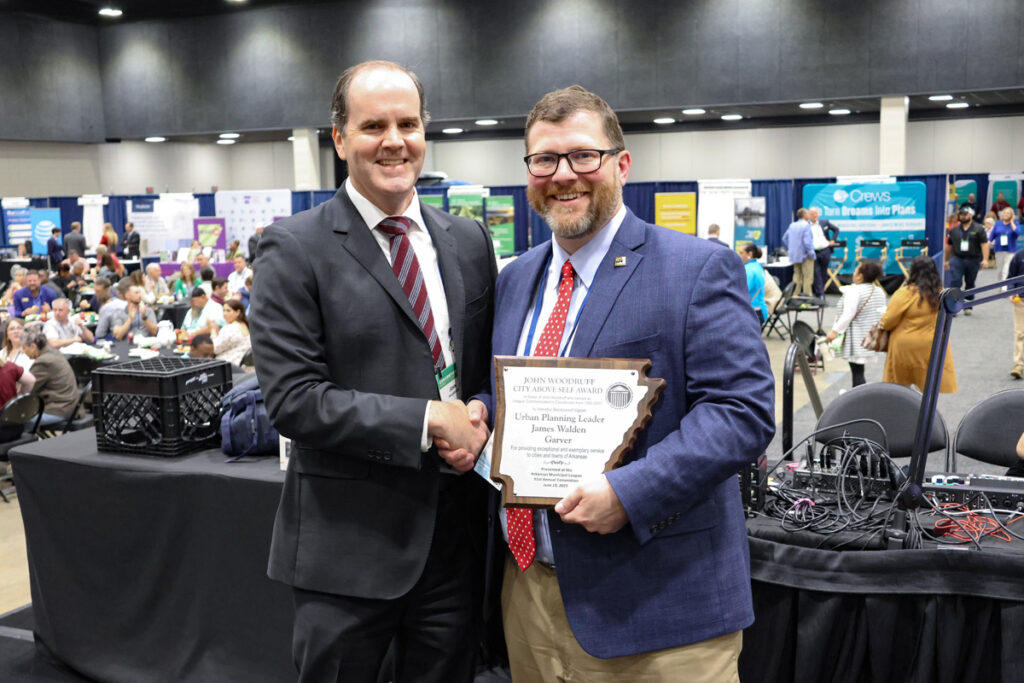
The second would be James Walden, who just happened to call one day and ask if he could offer some services while completing his master’s degree. A couple of mornings a week turned to a couple days a week and then to full time and then to an affiliation that lasts until this day. He’s a star and headed for a “Planners Hall of Fame.”
Leading others into a noble career is one of life’s true pleasures.
Oh, let me not neglect one planning colleague, a friend of more than half a century. Third-generation planner Rob Middleton, one of the finest urban planning policy analysts I have known, provides a blessed reality check when needed.
I’ll stop now, just short of maudlin. This isn’t goodbye. I’ll still be around, though perhaps not as visible. Remember: Old planners never die; they just revise their Table of Permitted Uses.