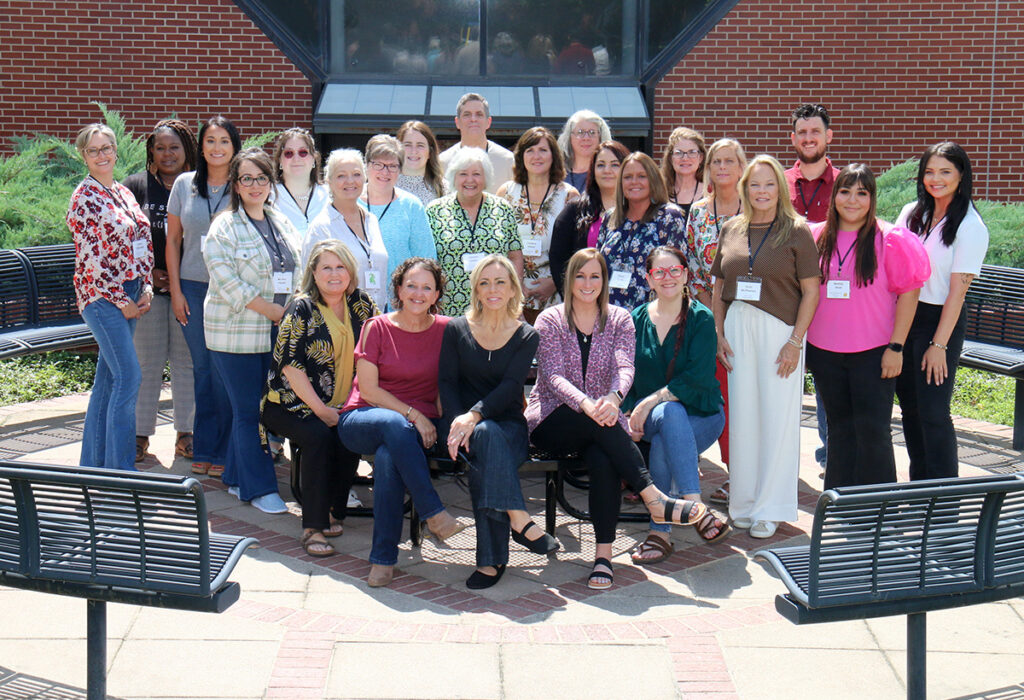
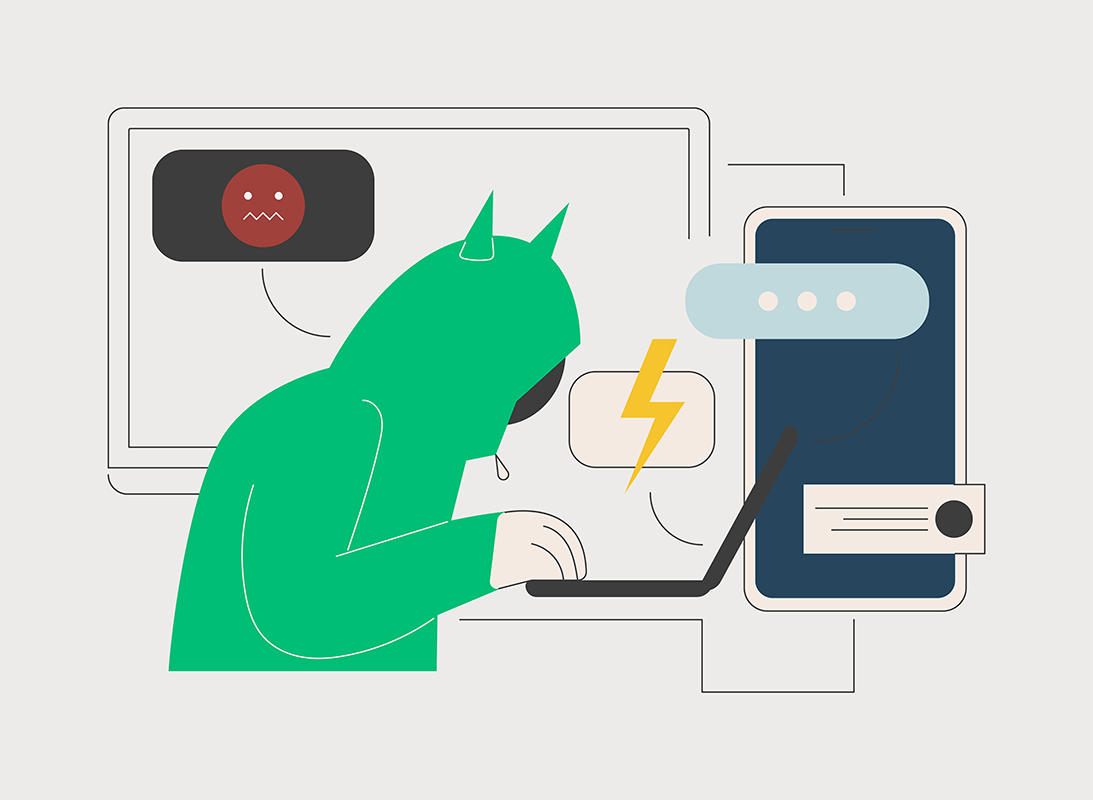
At a recent meeting of municipal officials from across the state, the conversation turned to the challenges public officials face on social media. Officials described an increase in distressing communication that ranged from minor vulgarities to implied or blatant threats. More disturbing, the officials described ways in which this form of online harassment is often directed at the family members of civil servants as well as those who chose to serve the public. Their frustration and outrage were unmistakable and entirely understandable.
With advancements in technology, we are more interconnected and accessible than ever before. Messaging is instant. Information or events can gain global attention in a matter of moments. While there are certainly positive and productive elements to this new culture of connectivity, the negative elements are often more palpable. Context is muddled, opinion is presented as fact and, sadly, the digital age presents ample opportunities for incivility and outright cruelty. Based on numerous civility studies, surveys about harassment of state and local officials, and the daily news cycle, American culture has clearly changed dramatically over recent decades. Increasingly, anger has become a first response, replacing constructive dialogue. Instead of viewing neighbors as individuals with differing perspectives, many now see those who disagree with them as adversaries.
While public officials at all levels of government face incivility, local officials are particularly exposed because they live and work among the people they serve. Citizens encounter them at grocery stores, restaurants, community events and other everyday settings. This accessibility is essential to public service, yet it also places local leaders in the path of direct verbal aggression. Social media has only intensified that scrutiny.
This raises a critical question: How can local officials balance the First Amendment’s broad protections for speech with the need to foster constructive—not abusive—dialogue about community issues?
The First Amendment in an online world
The First Amendment generally prevents government from censoring speech based on its content and viewpoint. The U.S. Constitution protects not only spoken words but symbolic actions, artistic expression and commercial speech. While most speech is protected, the right is not absolute. There are types of speech that fall outside of the First Amendment’s protections. Courts have established that obscenity, defamation, fighting words and true threats of violence, as defined by the courts, are not protected forms of speech.
It is also important to note that the First Amendment restricts government and not private companies or private employers. Social media companies may establish and enforce their own standards for user conduct.
Reflecting on these principles evokes a line from the 1995 film The American President, in which President Shepherd explains that defending free speech means tolerating—even celebrating—the expression of ideas that may deeply offend us. Idealistic? Certainly. But it feels far less abstract when the offensive speech is directed at you or your family. Fortunately, there are practical ways for public officials to protect themselves while upholding constitutional values.
Effectively navigating professional social media accounts
When used strategically, social media can promote engagement and support transparent governance. The key is maintaining professionalism and implementing thoughtful boundaries. Tone and language matters. When and how you choose to engage matters. Remember, incivility is a political issue as much, if not more, than a legal one. Consider the following steps to help mitigate uncivil interactions.
Maintain separate professional and personal accounts
In 2024, the U.S. Supreme Court handed down a ruling that had a major impact on the way public officials should manage and facilitate social media. In Lindke v. Freed, the court made an important distinction between personal speech and government speech. Officials should distinguish personal accounts from official ones. Personal accounts should clearly state that the views expressed are individual and not representative of the municipality. Privacy settings should be used to limit public access. When operating a personal account, the First Amendment protects you and your actions as a citizen. You can limit engagement, delete comments, and even block people on your private page if you choose. Keep in mind, however, that while doing so may be lawful, there could still be social or political ramifications.
If there is evidence that a private account is also used for public business, such as by officially announcing government action, or using government staff to make a post, the comments of third parties could be entitled to greater First Amendment protection. This area of law is evolving, but if the official is speaking on behalf of the government, it is unlikely that the official could permissibly block a user or delete comments based on the content or viewpoint expressed by a citizen. In this scenario, the social media page would likely be considered to be a type of public forum. Restrictions that are not content-neutral on speech in a public forum are presumptively invalid, and the government must show that the restriction was narrowly tailored to achieve a compelling government interest to rebut the presumption. For this reason, an official who blocks accounts or deletes comments could be at risk of being found liable for constitutional violations.
Adopt municipal social media policies
Because a government’s social media account is likely to be considered a public forum, cities and towns should adopt policies governing the use of official social media accounts. Municipalities are not required to allow public comments if the platform permits disabling them. Under these circumstances, a government’s social media page may be deemed to be a limited public forum, in which courts have held that speech may be limited to discussion on certain municipal-related topics as long as restrictions are clearly posted and consistently enforced. However, regulation based on viewpoint is never allowed, and you are strongly advised to review any proposed policy with your city attorney prior to implementation. The law is still fluid, and regulating speech always comes with a significant degree of legal risk.
Distinguish between criticism and harassment
Not every negative comment constitutes harassment. Legitimate criticism is protected speech. However, officials should immediately report behavior that crosses into:
- Repeated personal attacks
- False statements presented as fact
- Threats of physical, property or reputational harm
- Targeting of family members
- Stalking
- Hostility based on protected-class characteristics
- Reports may be made to the city attorney, law enforcement or the social media platform.
Avoid direct engagement
Engaging hostile users rarely improves the situation. Consider the following best practices:
- Don’t respond at all, or respond once with factual clarification.
- Avoid debating personal attacks or false claims.
- Do not respond emotionally.
- Do not escalate the exchange.
- Address the issue, not the individual.
Protect mental and emotional well being
Sustained harassment can take a toll. Officials should:
- Limit time spent reviewing comments.
- Turn off notifications.
- Designate staff to monitor official pages.
- Seek support from colleagues, clergy, counselors or friends.
When the city attorney should assist
City or private attorneys may help when:
- Defamation becomes legally actionable
- False information misrepresents municipal operations
- City employees experience harassment
- A protective order may be warranted
- Clarification of public records is needed
When to involve law enforcement
Law enforcement should be contacted when:
- Threats of harm or violence occur
- Doxxing or stalking takes place
- Conduct interferes with official duties
- Repeated contact continues despite a “do not contact” notice
Create and implement a proactive communication strategy
Transparent communication reduces misinformation. Helpful strategies include:
- Posting FAQs
- Sharing regular updates on city projects
- Publishing budget documents and summaries
- Providing “myth vs. fact” sheets
- Scheduling posts to ensure consistent, accurate information
- Turning off all comments on social media posts immediately upon posting
Serving as a local municipal official is deeply meaningful work, but it comes with challenges, particularly in an era when social media amplifies both civic engagement and public hostility. By maintaining professionalism, establishing clear boundaries between personal and official accounts, understanding when and how to respond, and prioritizing mental well being, public officials can navigate these challenges effectively.
When local leaders combine transparency, thoughtful communication and strong support systems, they not only protect themselves, they strengthen the trust and resilience of the communities they serve. The League publication Social Media and the First Amendment: Guidance for Arkansas Municipalities provides valuable information and includes a sample Municipal Facebook Comments Policy. The free publication can be downloaded at armuni.org/Publications.
If you have questions or would like additional information or resources, please do not hesitate to contact us.