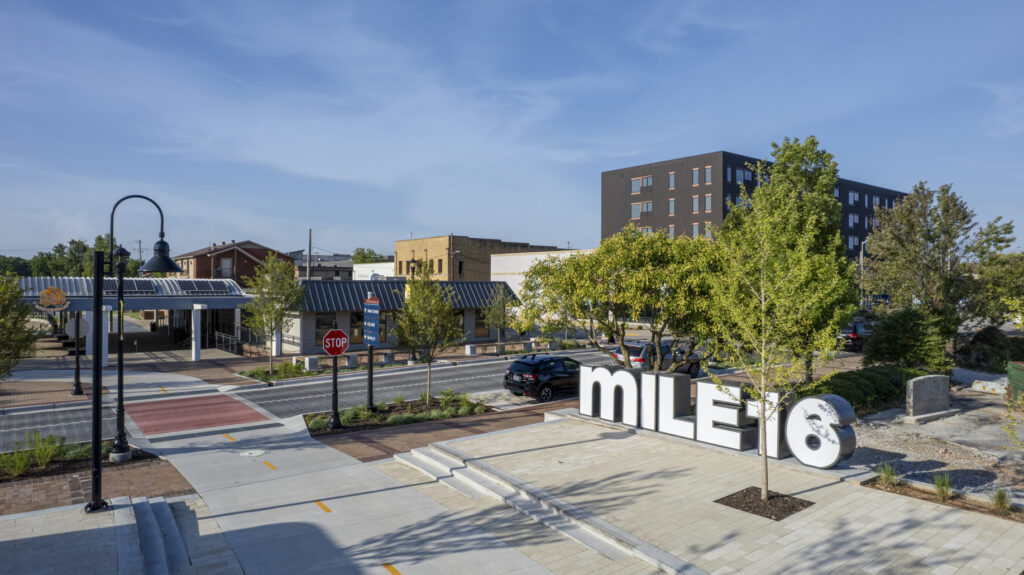
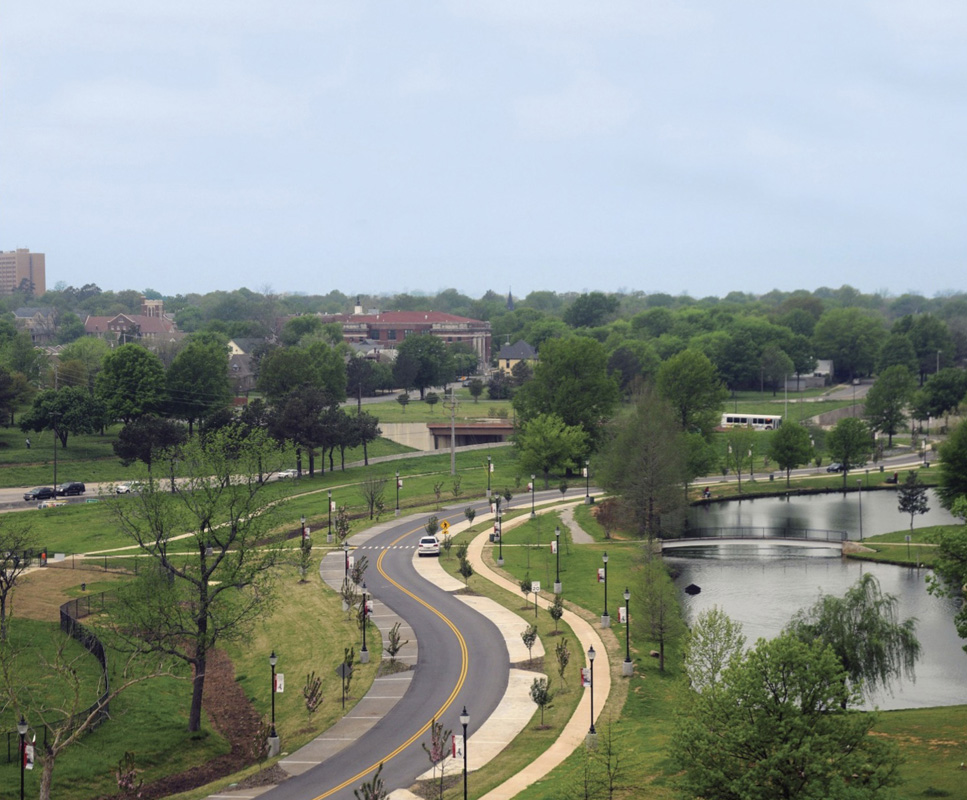
Across Arkansas, cities and towns are continuing to invest in parks, trails and downtown improvements. These projects do more than occupy land or satisfy immediate needs. When planned with intention, they shape how a community functions, how it is experienced and how it is remembered.
Public space is where community life becomes visible. It is where people gather for events, where children play, where neighbors run into each another and where visitors form their first impressions. The quality of these spaces influences not only how a place looks but how it feels. Over time, that experience becomes part of a town’s identity.
Intentional design begins by asking bigger questions before decisions are made on layout, materials or amenities. What kind of place are we trying to create? What should people experience when they walk through downtown, visit a park or enter a neighborhood? How should public spaces reflect the values of the community? These questions are answered through design choices such as site organization, circulation, scale, proportion, visibility, comfort, and the way spaces connect to one another.
This is why intentional design matters. Without it, projects can easily become a collection of disconnected parts: a sidewalk that leads nowhere meaningful, a park that feels like leftover land, or a development that turns inward and ignores its surroundings. With it, those same projects create a stronger sense of place: The park becomes a community gathering point; the corridor supports both movement and public life; the neighborhood feels connected, welcoming and cohesive rather than fragmented.
Parks offer one of the clearest examples. A park can be designed as little more than open ground with a few amenities placed on it, or it can be arranged as a hub of community activity. The difference is usually not about spending more money. It is about being deliberate with the placement of gathering areas, shade, play features, walking paths, seating, and connections to surrounding streets and neighborhoods. When those elements are organized with purpose, the park will be more usable, more memorable and more valuable to those around it.
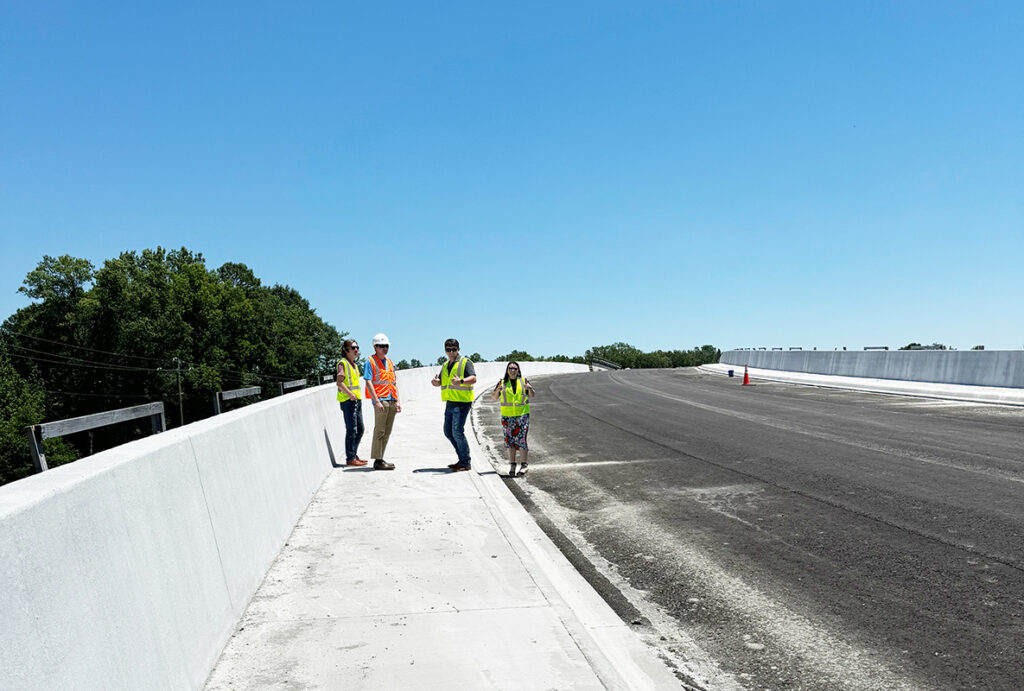
Transportation corridors present similar opportunities. A street has potential to do more than move vehicles efficiently. It can also help define the character of the area it serves. The relationship between sidewalks and storefronts, the width and comfort of pedestrian space, the presence of trees and landscaping, and the inclusion of places to pause or gather all influence whether a corridor feels active and inviting. When corridors are designed intentionally, they support mobility while reinforcing identity and encouraging economic activity.
The same principle applies to new development. Consider a subdivision that hopes to attract young families. If the design only focuses on lot yield and street layout, it may meet basic development goals but miss the qualities that make a neighborhood truly desirable. But if the plan includes usable green space, safe sidewalks and pedestrian connections separated from busy streets, and street trees for shade, the development begins to offer a lifestyle rather than just housing. Those design moves help create comfort, safety and visual identity. They also make the neighborhood feel more complete from the start.
Intentionality also has long-term benefits. Communities with well-designed public spaces often see stronger economic activity, more stable property values and greater private investment over time. Businesses are drawn to places that feel active, cared for and cohesive. Residents are more likely to take pride in places that reflect long-term thinking. At the same time, coordinated design can reduce maintenance issues and improve durability and efficiency. In that sense, intentional design is not an added luxury; it is a way to improve long-term performance.
None of this happens by accident. It requires planning, clear goals, and the involvement of qualified professionals who understand how to shape land, infrastructure and human experience into a cohesive whole. Landscape architects, working alongside engineers, architects and planners, help communities move beyond simply fitting uses onto a site. They help organize space in a way that is functional, durable and meaningful.
Arkansas cities and towns have an opportunity to shape their identity through the spaces they create now. The parks, corridors and developments being built today will influence daily life for decades to come. When these projects are approached with intention, they do more than solve today’s needs. They create places people recognize, remember and value, because the strongest communities are shaped not only by what they build, but by how thoughtfully they build it.