Arkansas municipalities have long asked for practical, flexible tools to strengthen local economies and quality of life. We’ve all heard the phrase “economic development.” For many, it may sound distant from the quality-of-life issues that matter most for citizens. While Issue 3 could be used to bring in major economic development projects, it could also be used for community development, like creating safe streets, vibrant downtowns, reliable utilities and amenities that make life better for the people who live and work here. This is not about abstract economics; it is about investing in the places we call home.
Issue 3 is designed to provide options for that work, not by raising taxes or diverting existing revenues, but by authorizing a voluntary framework that cities can use if, and only if, it fits local needs. On November 3, voters will see Issue 3 on the statewide ballot and make this important choice.
“Economic development is the lifeblood of any city. You cannot live on state turnback and keep up your basic infrastructure, much less make the quality-of-life improvements everybody seeks.”
—Mayor Charles Snapp, Walnut Ridge
If approved, Issue 3 would allow communities to form Economic Development Districts (EDDs), defined areas where resources align around city-identified goals. EDDs are voluntary and rooted in local control, giving cities and towns the flexibility to address their unique challenges and opportunities.
Building on a strong foundation
Local authority to foster development isn’t new in Arkansas. In 2016, voters approved Amendment 97, letting cities and counties finance development projects for industrial and corporate uses. Retail was excluded, however, and Arkansas has lost opportunities to neighboring states with broader local authority. The Arkansas Municipal League has long advocated for more tools. In 2025, the legislature adopted SJR15 (Issue 3), and League members voted during the 91st Annual Convention to support it. If approved by the state’s voters in this year’s General Election, Issue 3 would grant cities and towns new authority to entice retail and community development, helping Arkansas compete while maintaining local control and fiscal responsibility.
What does your city or town need?
“Essentially what we’re trying to do is take the cuffs off our cities. This allows cities to create their own opportunity zones, and who knows better where the need is than those cities?”
—Sen. Jonathan Dismang
Because local control is fundamental to Issue 3, “What does your city or town need?” is the first question to ask when thinking of ways to utilize this new tool. Depending on your city or town, the answer could mean many things: revitalized downtowns, infrastructure, small business vitality, attainable housing and much more. The design of Issue 3 is to empower local leaders to be creative and responsive to local needs. Of course, if Issue 3’s tools are not right for your community, there is no obligation to use them. But remember, surrounding states have similar tools, and Issue 3 is designed to level the playing field so Arkansas communities can make practical investments that strengthen daily life.
Complex? Not really.
If passed, Issue 3 will allow the creation of EDDs, which will be funded not through new taxes, but on the growth created by the new development inside the EDD.
When an EDD is created, a snapshot of the baseline property and sales tax revenue is taken. That baseline continues to flow to schools, counties and cities as usual—there is no decrease in existing revenues. As property values and commerce grow, only the incremental growth above that baseline is used to fund projects inside the district. This means current budgets remain intact while future growth helps pay for improvements like sidewalks, lighting and infrastructure. When the EDD’s term expires, the expanded tax base returns fully to the taxing authorities. This “increment” model, already used by surrounding states, allows communities to fund improvements without raising tax rates or cutting essential services.
What this could look like in practice
“What about retail? What about restaurants? Why don’t we have a clothing store? Those are the things people in Crossett are asking, and we have nothing to attract those. And this is going to be able to help us pursue those investments in rural south Arkansas.”
—Rep. Howard Beaty
Rep. Beaty is right. Issue 3 will help pursue investments in retail across Arkansas, which is critical since the retail industry is one of Arkansas’ biggest job creators. But Issue 3 can do more:
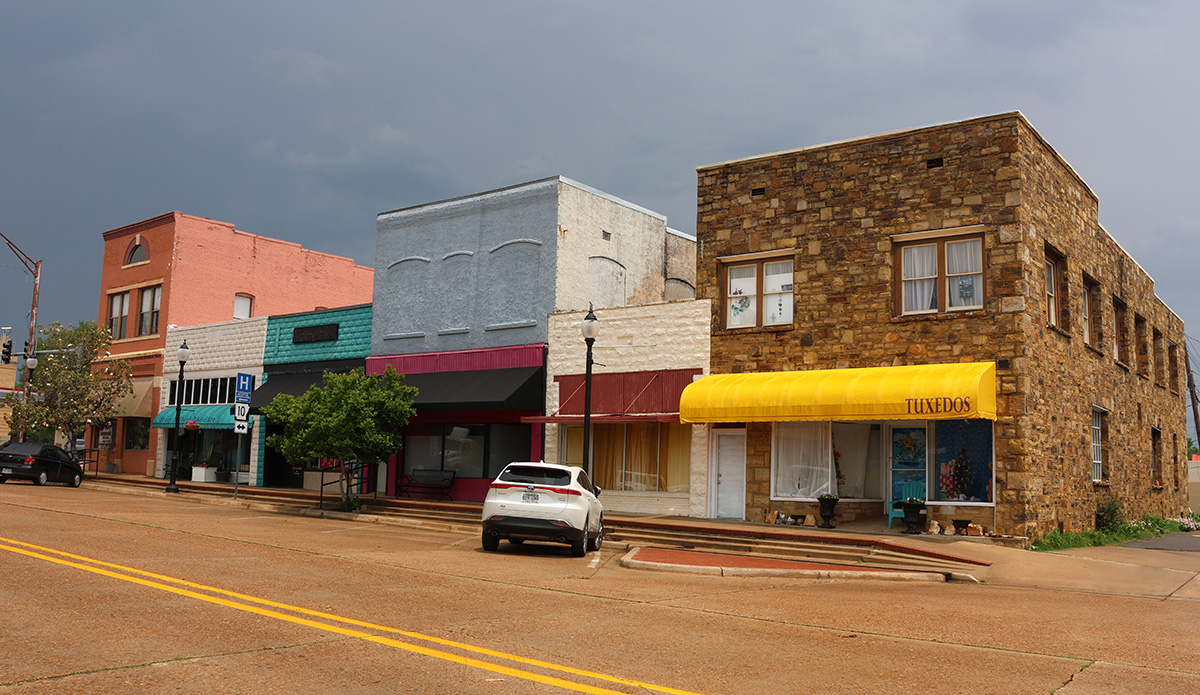
Downtown revitalization—Imagine a small town aiming to make its downtown a daily destination. The EDD could focus on basics: sidewalks, ADA access, lighting, trees, façade restoration and upper-floor housing. Incremental growth funds improvements, not new taxes. When the district ends, the expanded tax base returns to local entities. This approach allows for phased, visible improvements that residents and businesses can see and use every day.
Food access—In “food deserts,” an EDD could support a small grocer, restaurant or convenience store, with just enough public-side work (site prep, utilities, lighting) to make the site ready. By closing unusual financing gaps and tying support to clear milestones, communities can attract essential services that otherwise wouldn’t work in that location.
Workforce housing and childcare—For communities struggling with labor force and housing, an EDD could support infill housing and childcare near employers, using limited, performance-based support tied to clear standards. As businesses invest and sales rise, incremental growth helps keep sidewalks lit, childcare facilities and classrooms staffed and basic amenities maintained—again, without new taxes or diverting baseline revenues.
Transparency, accountability and the 2027 legislative session
Even if Arkansas voters pass the initiative this November, the work to ensure Issue 3 is successful has only just begun. The details of the process of creating and operating an EDD will be a big issue during the 2027 General Session, which means another important question to answer is, “How best could the procedure to implement Issue 3 work for local government?” While there are many details to finalize, we know the process will be focused locally and on collaboration.
Public trust is essential for any new tool or initiative in local government. When citizens believe their local leaders are acting with integrity, transparency and accountability, they are more likely to support community projects, participate in civic life and invest in their own neighborhoods. Trust is the foundation that allows cities and towns to move forward with bold ideas and practical solutions.
For Arkansas municipalities, public trust isn’t just a value, it’s a necessity. Cities and towns are stewards of public resources, responsible for making decisions that affect residents’ daily lives. That’s why the enabling legislation should include strong transparency and accountability measures, including public hearings and opportunities for residents to weigh in before an EDD is formed. Clear formation charters, published development plans and annual audits are important, but they work best when paired with community input. These steps ensure EDDs operate in the open, reflect local priorities and remain accountable to the people they serve. These safeguards help maintain public confidence, reduce the risk of mismanagement and encourage qualified individuals to serve in local government.
Ultimately, public trust empowers communities to pursue opportunity. When residents see that their leaders are accountable and their voices matter, they are more willing to support new initiatives—like those made possible by Issue 3—that can transform Arkansas cities and towns for the better.
“Creating a mechanism by which local communities can invest in themselves to create opportunity. That seems like common sense legislation to me.”
—Rep. Jeremy Wooldridge
Issue 3 is a tool for community development. It gives Arkansas communities a voluntary, locally controlled way to invest in the basics: safe streets, reliable utilities, accessible childcare and housing, vibrant small business districts, and connectivity. By focusing on tangible outcomes, communities can use EDDs to steadily improve daily life—and strengthen their ability to compete—without new taxes or diverting existing revenue. Guidance in SB647 will help ensure the tool operates transparently and responsibly.
Looking Ahead
If Issue 3 passes, enabling legislation will follow. SB647, “The Economic Development District Act of 2025,” is a strong starting point:
The goal is to build confidence. Local control and transparency remain central, with annual audits, public reporting and clear standards for openness and accountability.
If Issue 3 is approved, communities will have the option—not the obligation—to create districts.
To prepare:
Frequently Asked Questions
Does Issue 3 raise taxes or redirect existing revenue? No. It uses only the incremental growth above the current baseline. Schools, counties and cities continue to receive the same revenue they were receiving prior to the EDD being established. This approach ensures current budgets remain intact while future growth funds community improvements.
Is participation required? No. Communities opt in only if the tool fits local priorities.
How do communities form a district? By adopting a Formation Charter by ordinance. Cities, towns and counties can also collaborate regionally.
What kinds of projects can be funded? Infrastructure, small business support, land assembly and limited gap financing for otherwise infeasible projects.
How does this compare to neighboring states? Surrounding states already use similar tools. Issue 3 lets Arkansas communities adopt a comparable, right-sized approach.